Get Full Government Meeting Transcripts, Videos, & Alerts Forever!
Get email alerts on the City Budget topic
No spam. Unsubscribe anytime.
Boston council committee previews FY27 budget as officials warn of rising health‑care costs, hiring reviews and spending controls
Summary
City finance officials told the Boston City Council Ways & Means Committee the city closed FY25 with a modest $22 million surplus but faces midyear overages — largely public‑safety overtime and health‑insurance claims — and has issued spending‑control guidance and hiring reviews ahead of the FY27 budget.
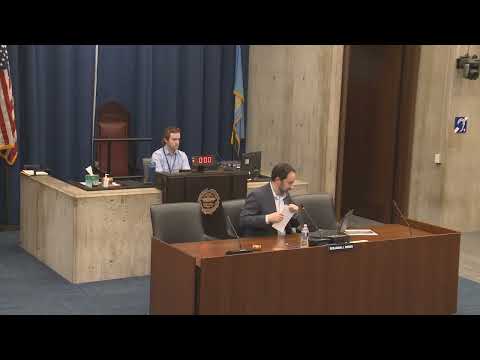
Chair Ben Weber convened the Boston City Council Committee on Ways and Means on March 23, 2026, to hear a preliminary budget review from the administration as the city prepares its FY27 operating budget. The administration’s chief financial officer, Ashley Roethlisberger, and the director of the Office of Budget Management, Jim Williamson, told the committee that while the city closed FY25 with a modest general‑fund surplus, several midyear pressures require new spending controls and a careful build for next year.
Officials said FY25 ended with a roughly $22 million surplus and a $17 million revenue surplus overall, but that roughly $71 million in deficits remained concentrated in statutory departmental accounts — principally public‑safety overtime, snow and winter‑management expenses, and some court‑related expenditures. The administration said those specific overages, combined with steeply rising health‑insurance claims this year, prompted guidance sent to departments in December asking them to limit nonessential spending and to submit more restrained FY27 budget requests.
The presentation noted several drivers of revenue and risk. Property taxes remain the city’s most reliable local revenue source, and interest income and certain departmental fees contributed to outperformance in FY25. At the same time, building and occupancy permit revenues have softened; departmentally generated revenues are tracking below recent years, the presentation said. The administration also reminded the committee that the city appropriated a one‑time $110 million from free cash last year to seed a Housing Accelerator Fund, which reduces the cash base that earns interest and therefore moderates that source of revenue going forward.
Health‑insurance costs were a central theme. Officials described the city’s health‑insurance trust as moving toward a deficit driven by overall claim growth, several very large individual claims and higher‑cost utilization patterns; they said the administration is preparing premium changes and other steps to restore the trust’s solvency for FY27. The administration gave a figure for the premium increase it expects next year and said those increases are a principal reason for the current spending controls and for close attention to benefit‑related liabilities.
On personnel, the administration described a citywide review of vacant positions and said departments were asked to pause many hiring steps while critical functions — notably public‑safety staffing and operationally essential roles — will be treated as exceptions. Departments were told they may appeal specific controls to the budget director and the city auditor. The administration emphasized the controls are intended to be targeted rather than punitive and that decisions will aim to protect core services.
Committee members pressed for specifics. Councilors asked when the council would receive the full revenue memo and forecast (the administration said detailed revenue assumptions will be published with the FY27 budget in April), whether the hiring freeze applies to offers in the final stages of processing, how many positions might be delayed, and which contracts or procurement deadlines might be affected. The administration committed to follow‑up on counts of positions under review, further detail on which line items are frozen and a schedule of procurement dates.
Lawmakers also pushed the administration on potential revenue expansions. Several councilors raised the municipal empowerment and excise‑tax ideas being debated at the state level; the administration noted that state legislative action would be required for most of those tools and that some proposals could meaningfully increase city revenue but depend on the Legislature. Councilors pressed on voluntary PILOT (payments in lieu of taxes) conversations with local colleges and universities; officials said negotiations are ongoing and contributions vary by institution.
Officials told the committee the city had applied for federal reimbursement of World Cup‑related public‑safety costs and received notification of a partial FEMA award; Boston expects to receive about $12.5 million from a larger federal award, less than the amount it had sought. They also said the city is not planning to balance recurring expenses with one‑time reserves and that the current approach prioritizes using controls over relying on fund balance for operating support.
The administration said it will publish the FY27 proposed budget on April 8, and will present the capital and five‑year capital plan alongside the operating budget. Committee members requested follow‑ups on specific items the administration referenced, including the detailed spending‑control memo, counts and categories of frozen funds, an account‑level breakdown of the $71 million midyear exposures (snow, public safety overtime, courts), and the status of the schools’ PILOT conversations. No formal votes were taken during the March 23 hearing; the meeting closed after committee members noted requested follow‑ups.