Get Full Government Meeting Transcripts, Videos, & Alerts Forever!
Get email alerts on the Student Publications topic
No spam. Unsubscribe anytime.
PVUSD board hears yearbook update, legal briefing and vows policy, training changes after student editorial
Summary
The Palos Verdes Peninsula Unified board received a legal briefing and staff update on a student yearbook editorial about the Israel–Hamas war, heard more than an hour of public comment from residents split on free-speech and anti‑bias concerns, and directed staff to propose policy revisions and expanded training for student publications advisers.
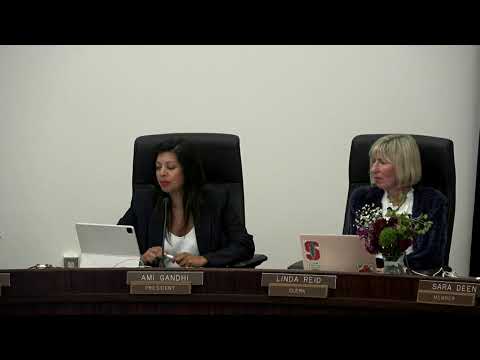
The Palos Verdes Peninsula Unified Board of Education on Dec. 3 received an update and legal briefing after community concerns about a Palos Verdes High School yearbook editorial that addressed the Israel–Hamas war.
Assistant Superintendent for Educational Services Dr Wildy told the board the district’s independent investigation concluded Nov. 15 and that legal review determined the piece “constitutes protected student speech.” Dr Wildy said the district acknowledges the editorial caused harm and described steps taken so far, including listening sessions, refunds offered to families who requested them, staff professional development and plans to recommend revisions to board policies on student publications. “I am deeply sorry for that pain,” she said.
District legal counsel Karen Bell (ALRR) briefed the board on the applicable law and limits on school oversight of student publications. Bell cited the U.S. Supreme Court’s Tinker decision and California Education Code section 48907 (student publications), noting the narrow exceptions for prior restraint — obscenity, true threats, incitement to unlawful acts or speech that substantially disrupts school operations. She also referenced Education Code section 48950 (additional protections for high‑school students) and federal nondiscrimination obligations under Title VI. “Public‑school students have a right to free speech, however this right is not limitless,” Bell told the board.
More than an hour of public comment followed the presentations. Speakers were sharply divided. Some residents urged the board to explicitly call the editorial anti‑Semitic and to require anti‑bias training for board members, advisers and staff. Jamie Schnell urged “anti‑Semitism training for all board members” and asked the district to acknowledge the editorial’s impact on Jewish families. Other speakers, including parents and alumni, defended student free‑speech protections and warned against censoring student expression, arguing the proper response is more speech and civic education rather than removal. Several commenters called for clearer reporting mechanisms and for a public summary of the investigation’s non‑confidential findings.
Board members expressed remorse for affected families, reiterated the district’s obligation to protect students from discrimination and affirmed a commitment to free-speech principles in the classroom. Several trustees asked staff to return with proposed revisions to board policies on student publications (policy 6145.3 and related policy 5145.2 were cited in the presentation) and with a plan for expanded adviser training and media‑literacy curriculum. At multiple times board members emphasized that personnel and student investigative records are confidential when they involve protected personnel or student information.
Next steps identified by staff included recommending policy changes on student publications, providing specialized training for yearbook advisers and journalism advisers, expanding anti‑bias professional development for teachers and administrators, and considering student‑centered restorative options to foster understanding across affected student groups. The board did not take punitive action against students during the meeting; staff repeatedly noted that the district’s response has focused on education and prevention.
The board’s direction was procedural: staff will draft concrete policy revisions and training plans and return to the board for consideration in coming months.
Sources: staff presentation and legal briefing by Karen Bell; public comment period; district statements during the Dec. 3 board meeting.