Get Full Government Meeting Transcripts, Videos, & Alerts Forever!
Get email alerts on the Zoning Text Amendments topic
No spam. Unsubscribe anytime.
New Britain zoning subcommittee refers five text amendments to council, including daycare and parking changes
Summary
The committee on Planning, Zoning and Housing voted Sept. 22 to send five zoning text amendments — covering daycare uses, fence rules in the CBD/historic districts, lot/impervious coverage, mechanical screening, and residential parking/curb-cut limits — to the full City Council with neutral recommendations.
New Britain City’s Committee on Planning, Zoning and Housing on Sept. 22 voted to refer five zoning text amendments to the full City Council with neutral recommendations after hearing staff presentations and limited discussion.
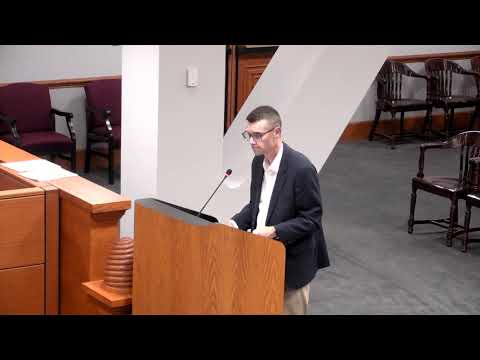
Jeff Cormier, the city planner, presented the city plan commission’s favorable reports on the petitions and summarized the goals for each amendment. “Child care has increasingly become a significant issue due to the lack of availability and affordability,” Cormier said while describing item 36881, which would explicitly permit daycare facilities for 12 or more children in several business and transit‑oriented districts (B1, B1R, B2, B3 and TOD) to expand capacity and repurpose larger buildings with parking for that use.
The committee also considered fencing rules (item 36882). Cormier said the amendment would allow eight‑foot rear fences in the city’s sole I1 industrial park, add consistent height rules for the CBDR residential edge of the central business district, and prohibit silver/galvanized chain‑link fence in the front yards of historic districts so nearby properties are treated equitably. He noted the change would also close a loophole that previously allowed owners of vacant lots — where no front yard is defined — to install tall fences that contrast with neighboring historic properties.
On item 36883, Cormier outlined adjustments to lot coverage and impervious‑surface limits in A2, I3 and several TOD zones. He said the amendments raise allowable building coverage (for example, moving A2 from about 30% toward 50% building coverage while keeping impervious caps around 75%) so sites are not dominated by pavement and parking and can accommodate larger, better‑designed developments without worsening stormwater impacts.
Item 36884 would require screening of mechanical equipment visible from adjacent streets in most districts but exempt rooftop screening in the I1 industrial park because of the district’s scale and the potential financial burden on industrial property owners; Cormier said screening remains required where industrial properties abut residential uses.
Finally, item 36885 would add rules allowing tandem (stacked) parking for residential units only, limit curb‑cut width on residential lots to 40% of the lot frontage (typically a 20‑foot maximum on a 50‑foot lot), and clarify nonconforming parking protections for existing sites. Council members asked about enforcement and how accessory dwelling units’ parking would be handled; Cormier said enforcement typically follows complaints or permit reviews and that ADUs must demonstrate required parking when they apply.
For each petition, a committee member moved to send the item back to the council with a neutral recommendation; seconders were recorded and the motions carried by voice vote.
What’s next: Each ordinance draft will appear on an upcoming Council agenda for formal consideration, where the full City Council may adopt, amend, or reject the text amendments after additional public notice and deliberation.