Get Full Government Meeting Transcripts, Videos, & Alerts Forever!
Get email alerts on the Emergency Services topic
No spam. Unsubscribe anytime.
Volunteer firefighter describes county EMS call volume, EMT training and hazmat response
Summary
Volunteer firefighter and paramedic Megan Barnes presented monthly EMS/fire data, described a recent hazmat tractor-trailer response involving ammonium nitrate, and said local EMT classes produced six new certified responders with six more expected to graduate in June.
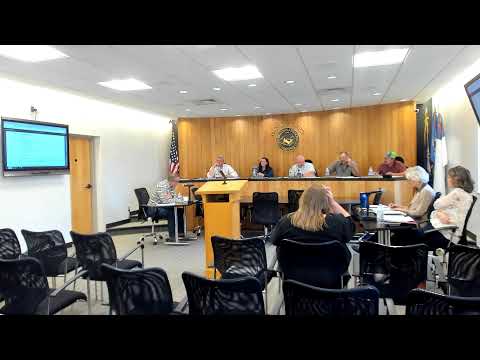
Megan Barnes, a volunteer firefighter and paramedic with Baywood Search and Rescue, briefed the Grayson County Board of Supervisors on April 26 on recent emergency medical services and fire activity, ongoing EMT training and a hazmat response earlier in the month.
Barnes told the board the packet contained two breakdowns of recent calls: one by disposition (cancelled, clear/no patient, refusal, transport, public assist) and another by geographic response area. She said Grayson County has recorded 2,398 calls year to date; fire agencies logged 476 calls and responded to 464 of them. "We still get to bill the patient equally just as we do whenever we run inside the county," Barnes said when asked about reimbursement for city versus county responses.
Barnes described local training efforts: this is the third EMT class she has run this calendar year. Of nine students in an earlier class, six passed the National Registry and are now serving in the county; an additional six students are expected to test in the first weekend in June. Barnes said deputies certified as EMTs have helped expedite scene care when they arrive first.
She also recounted a multi-agency response to an overturned tractor-trailer at the intersection of Forest Lane and Route 89. "I approached the vehicle, [the driver] said ‘ammonium nitrate,’" Barnes said, noting the load raised concern but team assessment found no active leaks and the patient was ultimately flown out for care and later reported to be recovering. Barnes credited cooperation among volunteers, Galax Fire, air medical services and large recovery companies for clearing the scene.
Board members asked follow-up questions about transport roles and reimbursement: Barnes and staff clarified volunteers perform transports and can bill patients, while county compensatory reimbursements differ when runs occur inside city limits. Chair and members thanked Barnes for the report and for training efforts that increase local EMS capacity.
The board took no formal action on the presentation; Barnes’ materials remain in the meeting packet and supervisors indicated continued interest in transport coordination and staffing data.