Get Full Government Meeting Transcripts, Videos, & Alerts Forever!
Get email alerts on the Committee Structure topic
No spam. Unsubscribe anytime.
Negotiators consider standing executive committee to address class size, safety and permissive topics
Summary
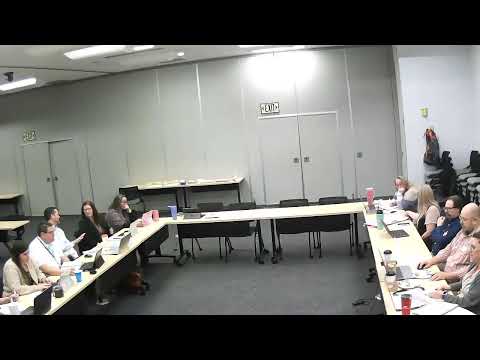
Negotiation participants proposed creating a standing or executive committee with a small core membership (suggested six) to meet periodically and recommend policy changes to the district board on permissive topics such as class size and safety, rather than addressing issues only once per year.
Negotiators proposed broadening committee language in the negotiated agreement to establish a standing or executive committee that could review permissive topics — such as class size and safety — more regularly and make recommendations to the district board.
A staff member described the idea as a way to avoid bottlenecks where issues "fester" until the annual meeting and to allow intermittent or quarterly review of topics that do not require full board votes. The group discussed a suggested membership size of about six standing members, with others invited when items directly affect them.
Participants debated meeting frequency and member engagement, suggesting twice-a-semester meetings as an option with flexibility to cancel when no items require discussion. Concerns were raised about potential disengagement if members feel a topic does not affect their role; negotiators discussed keeping the core membership small to maintain focus and attendance.
On next steps, negotiators agreed to draft committee-language options that would permit the group to develop recommendations for the district board without narrowing the committee’s scope in a way that limits discussion of related permissive topics.
The negotiators did not formalize membership rules or meeting dates during the session and left specific drafting to staff and subsequent meetings.