Get Full Government Meeting Transcripts, Videos, & Alerts Forever!
Get email alerts on the Wireless Infrastructure topic
No spam. Unsubscribe anytime.
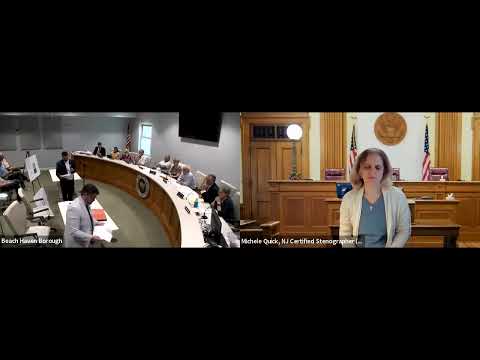
Beach Haven land use board rejects Verizon small‑cell pole near Taylor Avenue
Summary
The Beach Haven Land Use Board on July 7 declined to approve a Verizon Wireless application to install a small‑cell utility pole near 325 Taylor Avenue after debate over siting, aesthetics and notice; the applicant presented engineering, RF and planning testimony and asked for a waiver for required safety signage.
The Beach Haven Land Use Board on July 7 voted against a proposal from Verizon Wireless to install a small‑cell utility pole in the public right‑of‑way near 325 Taylor Avenue, after residents and board members raised concerns about the pole’s placement and visual impact.
Ed Purcell, attorney for the applicant, introduced a team of witnesses and asked the board to approve a site plan for a new utility pole to host Verizon antennas. "We are proposing to install a 38½‑foot‑tall utility pole which will have the Verizon Wireless antennas and associated advances installed on it," said civil engineer Peter Albano, describing plans that show seven antennas, two remote radio heads and an equipment cabinet under 17 cubic feet attached to the pole. Albano said the top of the concealment would be about 43.1 feet above grade and that pedestrian passage and sight triangles would be preserved.
John Mcdana, the project planner, told the board the pole is a permitted use in the borough’s BD business district and described the application as "variance‑free," noting that moving the installation into the adjacent RCB district would create a use‑permit issue. "This is a very clean application from a planning standpoint," Mcdana said, adding that the site was proposed after other options were exhausted.
Andrew Peterson, the applicant’s RF engineer, presented propagation maps and a needs analysis, saying the northern part of Beach Haven becomes overloaded during summer events and that the small cell — identified in Verizon materials as "Beach Haven 14" — would add capacity and offload traffic from a water‑tank site. Peterson also summarized an emissions memorandum and testified that anticipated ground‑level electromagnetic exposure would be well below FCC limits, cited as no more than 1.43% in his analysis.
Despite technical testimony, several board members and nearby business owners said the proposed location — at the park/restaurant corner adjacent to an area used for events and sunsets — is conspicuous and would obstruct views. Property owner JB Mascal, who said he owns the Bay Village, told the board he had not seen detailed materials in advance and called the proposed pole placement "offensive." "It just didn’t seem like there was enough information ahead of time on this," Mascal said during public comment.
Applicant counsel and staff responded that statutory notice procedures were followed: the required 200‑foot mailing and an affidavit of publication were submitted and materials were available on file at borough hall, though some board members said plans had not appeared on the town website. Board discussion also noted an ordinance provision requiring small cells to be more than 100 feet from multifamily housing and raised the practical limit of the federal 90‑day "shot clock" that governs some wireless siting reviews.
One motion to approve the application was made with two conditions: (1) that electric and fiber lines be placed underground, and (2) that Verizon agree to relocate the facility if the right‑of‑way is vacated in the future. The motion was defeated after a roll‑call vote.
The board did not adopt the application as presented and moved on to routine business, approving bills and a separate resolution about roadway repair. The meeting record shows the applicant’s team and board members discussed avenues for further coordination — including potential undergrounding of utilities and working with borough administrators should right‑of‑way changes occur — but no approval was entered for the Taylor Avenue installation at the July 7 hearing.
What’s next: the applicant may revise the proposal, consider alternate sites, or seek further administrative or regulatory steps. The record does not show any formal appeal filed at the meeting.