Get Full Government Meeting Transcripts, Videos, & Alerts Forever!
Get email alerts on the Energy Policy topic
No spam. Unsubscribe anytime.
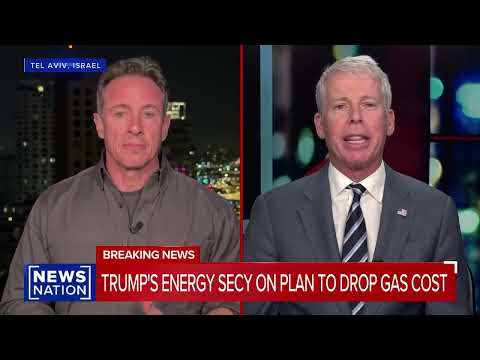
Energy Secretary Chris Wright says Iran is driving regional instability, warns of short-term price dislocation
Summary
In a broadcast interview, Energy Secretary Chris Wright said Iran’s support for militant groups and weapons production is destabilizing regional energy supplies, acknowledged short-term price disruptions, and defended coordinated releases from strategic reserves and allied countries as a stopgap while the U.S. acts.
Energy Secretary Chris Wright told a televised interviewer that Iran’s weapons shipments and support for militant groups have destabilized the Middle East and are disrupting global energy markets, and he defended administration actions that he said will cause short-term price dislocations but improve supplies over time.
Wright, identified during the program as the energy secretary, said, “I don't believe at all I can unilaterally correct the world pricing,” but argued that Iran is "the root of the problems in the Middle East," alleging that it "created Hezbollah" and "manufactures all of those weapons and ships them to Lebanon to destabilize the country of Lebanon, to terrorize the people of Israel." He tied those security actions to market disruption and said Iran has repeatedly intervened in energy markets.
The reporter pressed Wright on whether the administration had warned the public about likely short-term spikes in gasoline and other energy costs. Wright rejected that criticism and said administration officials had repeatedly said energy prices would be disrupted. He noted U.S. production capacity and defended coordinated releases from the Strategic Petroleum Reserve and allied countries as steps to help offset interruptions in flows through the Strait of Hormuz. “We announced the release of the strategic petroleum reserve ... we've used it for what it's for,” Wright said.
Wright said the campaign to degrade Iran’s weapons-making capacity is a "multi-week effort" that will cause temporary dislocation but yield long-term benefits. “This will take effort, but we are going to defang the government of Iran so they can no longer terrorize their neighbors ... and interrupt ... energy markets whenever they want,” he said, and predicted that a reduction in Iranian capability would lead to renewed investment and expanded energy production in the Middle East.
Asked how long it would take for prices to return to something approaching pre-crisis levels, Wright reiterated officials’ public guidance that the episode would be measured in weeks rather than months. He also described military operations as having strong early results and said dismantling decades of weapons infrastructure would take time.
The interviewer acknowledged the human and economic costs of the conflict and said hope is not a plan; Wright concluded by thanking the host and saying the administration would "keep executing the plan." The interview ended without any formal policy vote or new statute announced.