Get Full Government Meeting Transcripts, Videos, & Alerts Forever!
Get email alerts on the Outdoor Dining Policy topic
No spam. Unsubscribe anytime.
Council debates state-driven outdoor dining rules amid parking, noise and alcohol concerns
Summary
Beboro Council discussed a draft ordinance reconciling a new state law expanding outdoor dining with local zoning and noise rules; council members pressed the solicitor on parking calculations, limits on outdoor music and hours for alcohol service and asked staff to tighten permit, safety and insurance provisions.
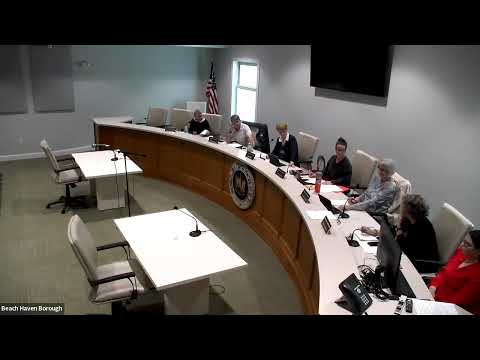
Beboro council members spent the bulk of the May 29 agenda meeting examining a draft outdoor dining ordinance (15C) drafted to align borough code with a recently enacted state statute that expands outdoor dining allowances for licensed establishments.
The conversation centered on parking, hours and public-safety limits. Solicitor Bruce, joined remotely, said the state statute permits restaurants with more than eight required parking spaces to use a portion of those spaces for outdoor dining and described the commonly cited 25%/75% calculation. “If a business has more than eight required parking spots, they're allowed to use 25% for outdoor dining,” Bruce said, adding that occupancy may be split between indoor and outdoor seating but that establishments must still comply with permitted occupancy limits.
Council members voiced concern about the effect on parking in a high-density shore borough. Multiple members said allowing use of required parking spaces could remove vital spots in summer. One council member characterized the statute’s parking implications as counterintuitive for a town that struggles with parking demand.
Council and staff also discussed restrictions for outdoor music and noise: whether to ban live music, limit amplified sound times, or set a uniform nightly cutoff. The draft would allow municipalities to clarify or restrict aspects of the state statute; council asked staff to draft language that narrows outdoor music allowances and sets clear end times.
Alcohol service and outdoor bars drew questions. Bruce explained the statute expands licensed premises but that constructing a permanent bar outdoors could trigger building and health-code requirements. “If they're constructing something then that might invoke other issues — construction permits, running water and health-department requirements,” Bruce said. Council members asked whether the borough could require outdoor service areas to close earlier than indoor bars; staff will propose time limits as possible permit conditions.
Public-safety issues were raised repeatedly. Councilors asked for explicit permit requirements for safety equipment (bollards or barriers between parking and seated dining) and for indemnification and insurance language. Bruce recommended requiring indemnification and a certificate of insurance naming the borough as an additional insured.
The council did not vote on the ordinance; instead members asked Bruce and staff to redraft sections covering the parking calculation, occupancy split, limits on outdoor music and hours for alcohol service, and stronger permit-based safety and insurance requirements. The council agreed to continue refining the draft before a future public hearing.
The solicitor noted that, while municipalities can add permit conditions and safety requirements, a blanket prohibition on using required parking spaces would likely be vulnerable to legal challenge under the state statute. The next procedural step is for staff and the solicitor to provide clarified language for council consideration.