Get Full Government Meeting Transcripts, Videos, & Alerts Forever!
Get email alerts on the Election Reform topic
No spam. Unsubscribe anytime.
Residents and advocates press Salisbury council to adopt ranked‑choice voting; supporters, skeptics spar during public comment
Summary
More than a dozen speakers used the Feb. 2 public comment period to urge the Salisbury City Council to adopt (or place on the ballot) ranked‑choice voting, citing greater representation and reduced negative campaigning; others questioned its necessity and raised procedural concerns.
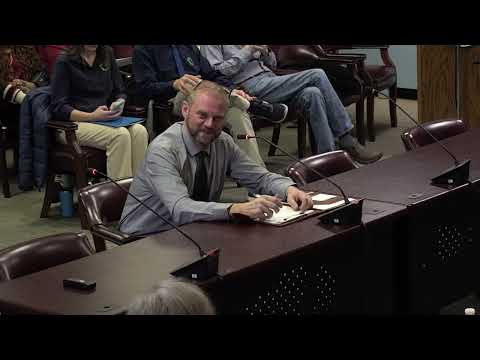
Dozens of residents and outside advocates used the public‑comment period at the Salisbury City Council’s Feb. 2 meeting to urge the council to adopt ranked‑choice voting (RCV) for city elections or at least place the issue before voters.
Michelle Whitaker, executive director of Rank Choice Voting Maryland, described the mechanics and benefits of the system: "You get to indicate not only your top choice but a backup choice...if no one has a majority, that's when an instant runoff kicks in," she said, and cited other U.S. jurisdictions that have adopted the method. Whitaker said RCV can help voters feel their voices are counted and can reduce negative campaigning.
Local speakers who supported adoption included Jared Shabline (District 3), who said Salsbury has experienced acrimonious local politics and that in recent multi‑candidate contests winners sometimes received less than 50% of the vote; he urged council to "pass an ordinance to implement rank choice voting for all city elections without delay" or, at minimum, place the measure on the ballot. Desmond Stewart, a District 4 resident, argued RCV can increase representation for communities of color and encourage coalition building. Multiple other residents, including Connor Roman and Chase Phillips, described RCV as a way to let voters "vote for people we actually like" and to avoid choosing the ‘‘lesser of two evils.’"
Opposing or skeptical voices questioned whether RCV addresses Salisbury’s local needs. Michael Langford, a Salisbury resident and former official, said RCV is most useful in large, partisan primaries with many candidates and argued the city does not face that problem; he urged caution. Harry Basart, a former member of the City Board of Elections, recommended considering a runoff alternative if councilors want majority outcomes. Robert Taylor and another speaker raised procedural concerns about how the meeting notice referenced election reform broadly rather than RCV specifically and questioned whether organized outreach had prompted turnout among supporters.
Speakers on both sides cited examples and outside jurisdictions; supporters pointed to cities and states that use the method and said post‑election surveys show voter comprehension after experience; skeptics said the method is still used in a small fraction of U.S. municipalities and asked whether it solves Salisbury’s specific turnout and trust problems.
Council members did not take action on RCV at the meeting; several public commenters asked the council to provide education and formal consideration. Commenters also raised related concerns (voter turnout, election administration) and asked for public education if the council considers changes.
What happens next: Councilors may refer the question to staff for research or bring an ordinance or ballot measure for a future meeting; several commenters explicitly asked the council to place RCV on a ballot for voter decision.