Get Full Government Meeting Transcripts, Videos, & Alerts Forever!
Get email alerts on the Municipal Budget topic
No spam. Unsubscribe anytime.
Auburn council adopts 7.5% working tax‑levy benchmark to guide FY27 budget talks
Summary
At a March 2 workshop, Auburn councilors agreed on a 7.5% working tax‑levy benchmark to guide FY27 budget deliberations, citing large, fixed increases in debt service tied to a new public safety building and other contractual costs; staff will model options for reaching the target and present them at upcoming workshops.
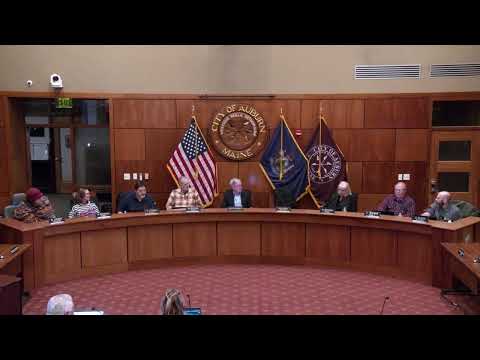
AUBURN — At a March 2 Auburn City Council workshop, councilors set a 7.5% working tax‑levy benchmark to guide deliberations on the city’s proposed FY27 budget, a figure council members said gives staff a target for modeling cuts, shifts and revenue options without locking the council to a final number.
Councilor Adam Platt, who urged a low target, said, “I’ll say 5%,” as one possible goal. Councilor Kelly Butler argued for a middle ground and proposed 7.5% as a practical starting point; the mayor and other councilors accepted that as the working benchmark for staff to use in preparing detailed fiscal scenarios.
Why it matters: staff and councilors said fixed, largely non‑discretionary costs — especially a large increase in debt service tied to the recently approved public‑safety building — account for most of the projected budget rise. Managers told the council that those fixed items absorb the majority of the budget pressure, leaving a smaller share of the increase for programmatic choices.
City Manager Phil Croll outlined the process and schedule for the budget: staff will convert the council’s benchmark into dollar adjustments and run scenarios showing how municipal services, the capital improvement program and supplemental requests would change under different levy targets. The manager also reminded the council the charter requires adoption of the budget and CIP by June 30; if the council does not adopt a budget, the manager’s proposed budget becomes the city’s budget on July 1.
Drivers and tradeoffs: earlier staff material and council discussion identified several specific cost drivers: a large portion of the debt‑service increase is linked to the new public safety facility; health‑insurance costs and step increases for union contracts are built into FY27; and solid‑waste and utilities have notable vendor cost increases. Staff cited a jump in the municipality’s tipping fee paid to the waste‑to‑energy operator and other contractual increases that together push the municipal services total upward.
The council also discussed options that could shift costs or revenue, such as changes to solid‑waste collection (automation, curbside bins and collection frequency) and user‑fee strategies that would move some costs off the tax base.
Public involvement and schedule: staff laid out a schedule of workshops and outreach including a budget town hall scheduled for March 10 (6:00–8:00 p.m. in the community room) and additional workshops on March 9, 14, 16, 23 and 30 and a pre‑meeting workshop on April 6. The manager said staff will post the FY27 materials on the city website and supply spreadsheets that translate a council benchmark into specific dollar adjustments and proposed service impacts.
Next steps: staff will build scenarios around the 7.5% working benchmark and return to the council with department‑level options and the CIP debt schedule at upcoming workshops; the council will use those scenarios to refine its target before formal votes later in the spring.