Get Full Government Meeting Transcripts, Videos, & Alerts Forever!
Get email alerts on the Homelessness Safe Parking topic
No spam. Unsubscribe anytime.
Lake County moves to fund safe-parking pilot with Catholic Charities using encampment resolution funds
Summary
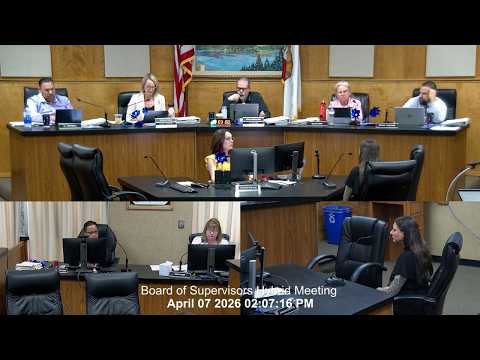
The Lake County Board discussed a proposed agreement with Catholic Charities of Northwest California to operate a countywide safe parking program funded from state encampment resolution funds (up to $400,000 through June 30, 2027). Board members probed site, service amenities, eligibility screening and insurance requirements; a motion was moved and seconded and one member voiced opposition; the transcript does not record the final tally.
Lake County supervisors considered an agreement to hire Catholic Charities of Northwest California to operate a safe parking program for people living in vehicles, using up to $400,000 from state encampment resolution funds and running through June 30, 2027.
Elise Jones, Lake County behavioral health director, told the board the contract is a procurement of the Lake County Continuum of Care and has followed that body’s process. “This is moving in a positive direction to try and create a safe space for folks who are unhoused and also living in a vehicle,” Supervisor Sabatia said during the discussion, urging that the program be used to connect people to shelters and services.
Board members and staff described a site-selection process that narrowed a host location to a Clear Lake church parking lot; a city use-permit process has been initiated. The program is planned as countywide in scope and would operate overnight, roughly 8 p.m. to 8 a.m. Officials also described a separately funded ‘‘dignity bus’’ retrofit intended to provide up to about 20 beds that could be sited alongside the safe parking location to serve people without vehicles.
Supervisors and staff reviewed the funding picture: the Continuum of Care received approximately $1.5 million from the state encampment resolution fund; about $400,000 is designated for the Catholic Charities safe-parking project, roughly $400,000 was described as set aside for a dignity bus, and about $536,000 was mentioned for street outreach — speakers cautioned those amounts are approximate and recorded figures may vary. Outreach funding was described as countywide.
Members asked about onsite amenities and client supports: staff said multiple shower trailers exist and that one is regularly parked at the Clear Lake senior center; Adventist Health was named as a Continuum of Care partner that can help coordinate services. Supervisor Piska asked whether participants would receive gas cards or other travel assistance to keep appointments; staff said that had not been decided and that providing direct cash or gift cards to individuals raises public‑funds and policy questions but that vouchers and similar supports have been used for food and laundry in other county programs.
Eligibility and safety rules were discussed. Board members noted contract language excluding certain convictions; staff and Scott Abbott said the contractor and its staff are required to meet organizational background and conviction checks (embezzlement, theft, forgery or bribery were cited as examples), and that exclusions for specific client categories such as registered sex offenders may differ between shelters and this contractor’s program. County counsel Lloyd reviewed Exhibit C of the agreement, saying the contract includes standard indemnification clauses and insurance requirements including a $1 million comprehensive public liability policy for the contractor.
Lars Yuing, interim public works director, spoke in support and offered county parks staff help publicizing the service across park properties so people who typically use parks are informed of the safe-parking option.
A board member moved to approve the agreement and another seconded. The chair was asked to be authorized to sign. During the roll call the transcript records one member saying, “I opposed.” The provided transcript does not include a full roll-call tally or an explicit statement that the motion carried.
Next steps described by staff included finalizing the use-permit details and agreements with the host church, coordinating amenities and outreach, and refining operational policies such as vehicle conditions, on-site services and background-screening procedures before program launch.