Get Full Government Meeting Transcripts, Videos, & Alerts Forever!
Get email alerts on the Anti Displacement Sound Transit topic
No spam. Unsubscribe anytime.
Council roundtable presses Sound Transit and city for clearer relocation funding and protections for West Seattle small businesses
Summary
Small‑business owners from North Delridge and West Seattle told council members they face uncertainty about relocation costs; Sound Transit described design changes (including removing the Avalon station) to reduce property acquisitions and outlined relocation benefits and pause on some acquisitions while cost‑savings work continues.
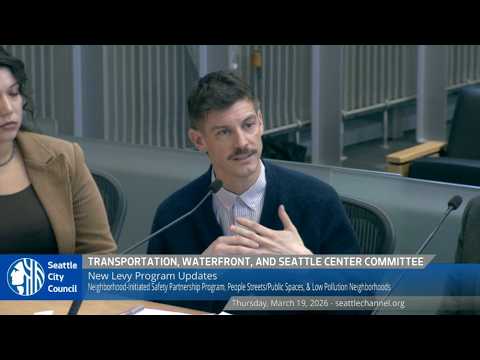
Small businesses directly affected by the proposed West Seattle Link Extension told Seattle’s council committee March 19 that uncertainty about relocation funding and timing is their primary concern, while Sound Transit officials described design changes they say would reduce the number of impacted properties.
Laurel, owner of Ounces in North Delridge, said her business has been on Sound Transit’s potentially‑impacted list for years and pressed the panel for concrete funding answers. “Where does the money come from?” she asked, noting Sound Transit’s statutory relocation assistance does not cover all relocation costs and raising the risk of a funding gap for many small owners.
Sound Transit’s Jason Hampton outlined alternatives staff are studying to reduce impacts and costs, including eliminating the Avalon station and consolidating service at Alaska Junction/Delridge. Hampton said the consolidation would shift ridership and reduce the need to acquire properties south of the Alaska Junction station, potentially preserving dozens of businesses in at least one affected property block.
Panelists described the relocation and acquisition process: once Sound Transit determines a property is needed and the board approves acquisition, staff prepare appraisals and issue notices of relocation eligibility. Wells Lawson and relocation staff described benefits available under the Uniform Relocation Assistance rules and related state law, including moving costs, payment differentials, search costs and a capped reestablishment payment (noted in the hearing as a $24,000 cap for some reestablishment payments). They also said some moving and vendor payments can be paid directly by Sound Transit to avoid forcing business owners to front costs and later seek reimbursement.
City staff and the Rainier Valley Community Development Fund described complementary support. Jasmine Marwaha (Council central staff) summarized recent council budget actions, including a $250,000 OED set‑aside for North Delridge and a legislative request for an interdepartmental report due June 15, 2026, with recommendations on supporting businesses along the West Seattle corridor. Alvertis Brooks of the Rainier Valley fund outlined the fund’s experience supporting hundreds of businesses during past transit projects.
Councilmembers pressed for additional interim measures: protective rents or temporary financial offsets while design uncertainty continues; first‑opportunity return rights to vacated station‑adjacent retail in future transit‑oriented development; and clearer, earlier outreach and ‘office hours’ from Sound Transit for affected businesses. Sound Transit acknowledged shortcomings in early outreach in some neighborhoods and pledged to expand direct engagement and hold more frequent, accessible meetings.
No formal action was taken. Councilmembers said they expect continued follow‑up as Sound Transit refines design alternatives and as city departments and community funds coordinate deployment of short‑term financial supports and longer‑term anti‑displacement strategies.