Get Full Government Meeting Transcripts, Videos, & Alerts Forever!
Get email alerts on the School Budget Cuts topic
No spam. Unsubscribe anytime.
Chelsea school leaders propose cuts to roughly 70 student‑facing positions; students and staff demand alternatives
Summary
Chelsea district administrators told the School Committee that a 350‑student enrollment drop has helped create an $8.6 million gap, and proposed eliminating about 70–76 student‑facing positions; hundreds of speakers — students, parents and educators — urged the committee to protect counselors, social workers and multilingual staff and to shift cuts away from classrooms.
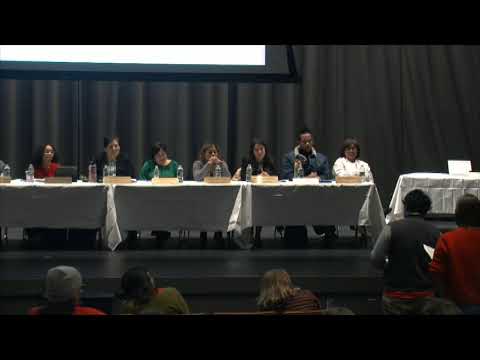
Chelsea — The Chelsea School Committee heard detailed budget figures and a proposed package of staff reductions at a packed meeting on the evening the district reconvened a rescheduled session. Administrators said a sustained decline in enrollment — about 350 fewer students this year — and reductions in pandemic‑era funding have combined to create a multi‑million dollar shortfall that requires cuts to balance next year’s budget.
"For every student we get about $19,000," Superintendent Dr. Alvea told the room as she framed the choices ahead; administrators said that initial estimates rose from a starting gap of $11.6 million to $13 million during review and that outside revenue and city support reduced the current shortfall to roughly $8.6 million. Billy Joe Turner, the district chief financial officer, described how salary and benefit growth — which the presentation said comprise roughly 80% of district costs — left the district with limited options.
That arithmetic, administrators said, leaves the district proposing roughly $6.8 million in school‑level savings and $1.7 million in district‑level reductions. The proposals enumerated cuts school‑by‑school — including classroom teachers, tutors, bilingual and special‑education staff, reading specialists, counselors and social workers — producing the estimate that 70 to 76 student‑facing positions would be eliminated or reduced across the district.
"We don't have a choice unless we get more money from the governor or the city," one administrator said in response to committee questions, noting that even eliminating central office personnel entirely would not avoid some school‑level reductions given the size of the gap.
The proposal prompted an unusually long public comment period. Students, parents, classroom teachers, paraprofessionals, counselors and social workers testified one after another about the impacts they say the cuts would have on student safety, mental health and classroom learning. "They're not just people who stand in front of a classroom. They're the people who check in on you," said Josyn Tico, a senior at Chelsea High School, who described the personal consequences of losing long‑standing adult supports.
Speakers emphasized the district’s multilingual composition and urged the committee to preserve positions that serve English‑language learners and students with special needs. Multiple speakers asked the committee to pursue smaller, proportional cuts at the central office and to press the city and state for more funds rather than making cuts concentrated in classrooms.
Committee members pressed administrators for details during a questions-and‑answers segment. Katy Gaval, an at‑large School Committee member, asked whether the plan accounted for a recent roughly 10% reduction in Title I funds; administrators said they had worked to absorb Title I reductions where possible but still face a sizable gap. Administrators also outlined the district’s budget calendar and said the committee will vote on a final budget on March 26.
The meeting ended without a vote on the budget. The presentation and the public testimony make clear the central tension the committee faces: administrators say the district’s revenues no longer cover current staffing levels, while community members argue that student‑facing positions — counselors, social workers, multilingual educators and classroom staff — are essential and should be protected.
What’s next: the committee plans additional budget meetings and a formal budget vote on March 26. District officials said they will continue to refine the savings package and said they will consider public input as they finalize recommendations.