Get Full Government Meeting Transcripts, Videos, & Alerts Forever!
Get email alerts on the Zoning Reform topic
No spam. Unsubscribe anytime.
Commissioners debate 'hub-first' path to implement Ann Arborcomprehensive land use plan
Summary
Commissioner Adams urged the commission to prioritize rezoning the plan's 'hub' category and adjacent 'halo' transition areas this year to accelerate housing production; public commenters split between urging rapid action and demanding more neighborhood-level engagement and infrastructure analysis. Staff agreed to prepare options and a work session in April.
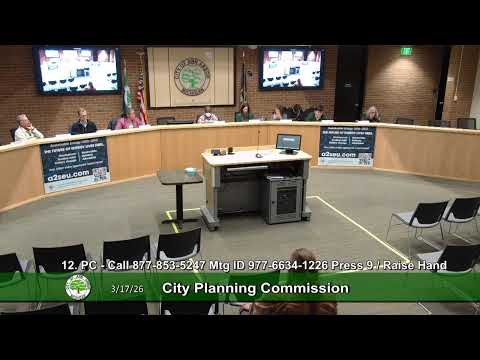
The Ann Arbor Planning Commission spent the largest portion of its March 17 meeting debating how to implement the comprehensive land use plan the council approved the night before.
Commissioner K. Adams (identified in the transcript as Commissioner Adams) presented a memo recommending a three-part approach: prioritize rezoning the plan's "hub" category and limited "halo" transition areas before the end of 2026, adopt execution and process changes (text-first, chunked review), and include carefully designed incentives for sustainability and affordability. "The main recommendation in there is those two things — hub and halo transition first and by the end of the year," Adams said.
Public commenters were sharply divided. Some speakers urged immediate action and shorter timelines to address the housing shortage: "Itwill allow us to execute on the most well-defined ideas... and quickly unlock significant potential for new housing in Ann Arbor," said a commenter, urging prioritization of less contentious zones. Others, including longtime neighborhood residents, urged the commission not to bypass promised neighborhood engagement: "This memo doesn't propose anything like that... I don't understand what it is you're advocating as the fast starting point," Tim Rhodess told commissioners, calling for parcel-level clarity and more outreach.
Commissioners echoed both concerns. Several members said they favored starting with hub but asked staff for data and a work plan that addresses parcel counts, infrastructure constraints (notably stormwater capacity), public-notice strategies (postcards, dedicated community meetings), and staffing needs. Commissioner Norton emphasized stormwater risk and coordination with water-system staff; Commissioner Mills urged mailed notice to affected properties. Multiple commissioners discussed whether to use moratoria or deprioritization for incoming rezoning petitions during implementation; staff declined to recommend a moratorium immediately but said it would present options and resource implications.
Mr. Leonard (city planning staff) said he will prepare options and recommended materials for an April work session to translate the commission's feedback into an implementation road map. "If there are questions or information that you think would be helpful for that discussion please send me a note," he told the commission.
No formal vote was taken on Commissioner Adams's memo at the March 17 meeting. Commissioners indicated they want staff to bring back a concrete work plan and scheduling options to guide whether hub-first or an alternative sequencing should be pursued, and what public-engagement and technical analyses will be needed for rezoning citywide.