Get Full Government Meeting Transcripts, Videos, & Alerts Forever!
Get email alerts on the Cdbg Allocation topic
No spam. Unsubscribe anytime.
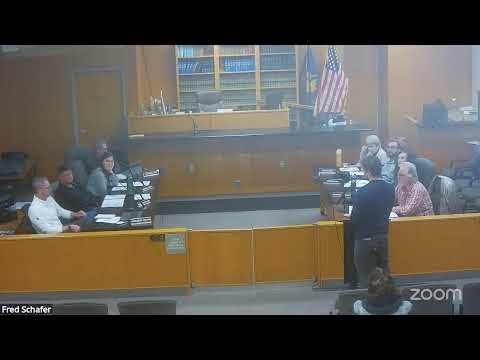
Goshen commission hears CDBG funding pitches from local nonprofits
Summary
At its March 3 meeting, the Goshen City Community Relations Commission heard proposals from local nonprofits requesting CDBG funds for food, transportation, shelter services, child care, housing assistance and energy improvements. Presenters described beneficiaries, budgets and specific dollar requests that will feed into the city's annual HUD action plan.
GOSHEN — The Goshen City Community Relations Commission reviewed a slate of Community Development Block Grant (CDBG) funding requests at its March 3 meeting, hearing from nonprofit providers who described service demand and specific grant dollar requests that will be folded into the city’s annual action plan to the U.S. Department of Housing and Urban Development.
Teresa Cummings, the commission’s CDBG program director, opened the presentations by explaining that proposals must meet HUD national objectives — benefit low‑ and moderate‑income people, address slums and blight, or respond to urgent needs — and be eligible under HUD rules.
Nonprofits described a mix of basic‑needs and housing supports and gave precise dollar requests. Lana Leftwitch, senior director of strategic partnerships for the Boys & Girls Clubs, asked for $5,500 to provide meals and snacks at the Gan Club on Crescent Street, saying the club serves roughly 700 members with an average daily attendance of about 300. "You have to think about hunger — teenage boys are burning through about 3,000 calories a day," Leftwitch said, arguing the funds would supplement state school food programs when school is out.
Tina Freley, CEO of the Council on Aging, requested $7,500 to support in‑city transportation for older residents, explaining the organization budgets about 18,600 trips annually and prioritizes medical trips; she said CDBG funds are claimed monthly and restricted to travel within city limits. Eric Miller, director of the Clubhouse, requested $5,000 for his program’s lunch service, noting the meal program is a primary access point for adults with serious mental‑health needs and serves about 400 meals a month. "The promise of a warm meal with a group of people that you can relate to is powerful," Miller told commissioners.
Mindy Morhead, executive director of First Light Mission (a shelter for single women and families with children), said the shelter has 43 beds, remains full and is turning away roughly 150 potential guests per month; she stated a request of $42,000 to support a healthy‑eating/snack program and described a roughly $450,000 annual operating budget. Maple City Healthcare’s grant writer, Mike, described a $6,000 request to subsidize care for low‑income patients and highlighted a new donated mobile unit that will expand outreach.
Early‑childhood provider Walnut Hill requested about $19,680 to sustain scholarship support after significant federal CCDF cuts, said Executive Director Lee Wheeler. Wheeler described average annual child‑care costs and said block grant dollars often help leverage matching donor funds. Lacassa outlined two efforts: Daniela (transcript: Daniellea) Petta asked for $7,000 to support phase two of a neighborhood engagement initiative targeted to a census tract the presenter said is roughly 84% low/moderate income; Ashley Bowen requested $45,000 in homeownership assistance to provide $15,000 each to three buyers with a five‑year recapture condition; and Brad Hunsburgger sought $47,900 for owner‑occupied rehabilitation and described multifamily solar projects intended to reduce utility costs by an estimated $13,000–$15,000 annually across targeted buildings.
Commissioners did not take final funding votes at the meeting. The presentations and the figures provided will be used in drafting the city’s annual action plan to HUD, which determines the community’s CDBG allocation and eligible activities. The meeting then moved to routine business: the commission accepted the financial report by voice vote, discussed logistics for an upcoming International Women’s Day event and adjourned.
The commission made several routine motions during the meeting (approving the agenda and minutes, accepting the financial report and adjourning) by voice vote; specific tallies were not recorded in the transcript.