Get Full Government Meeting Transcripts, Videos, & Alerts Forever!
Get email alerts on the Professional Licensing topic
No spam. Unsubscribe anytime.
Consumer Protection Department board approves multiple licensure applications, debates 48‑credit standard and experience rules
Summary
At its May 12 meeting the Consumer Protection Department board approved a slate of licensure and reciprocity applications (voice votes carried) and engaged in a prolonged discussion to clarify when a master’s or foreign degree can substitute for an ABET‑style undergraduate program—proposed language would require a minimum of 48 board‑acceptable engineering credits plus defined experience credits.
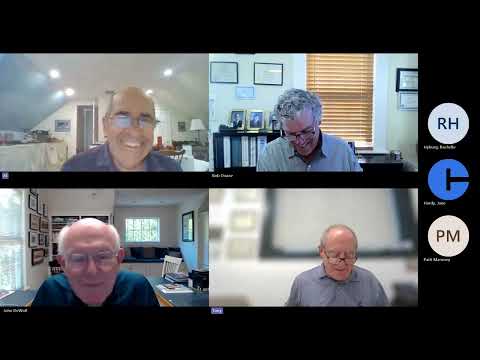
The Consumer Protection Department board convened May 12 and approved a series of licensure and reciprocity applications, then spent substantial time debating language to standardize how the board evaluates foreign and graduate engineering credentials.
Janita, an investigator for the department, opened substantive business with the monthly complaints report, saying the office closed two complaints for March–April: one land‑surveying matter found to be a civil dispute of facts and one engineering firm complaint closed for insufficient evidence. "When we say it's a civil matter, it's because we have no jurisdiction to order a land surveyor or an engineer to give somebody money or do something," Janita said, describing a recurring pattern in which dissatisfied complainants seek intervention from outside offices after an administrative closure.
The board then moved through its licensing agenda by candidate group. The chair read lists of candidates who passed the NCEES exams for April and the board approved multiple Class 1 Part 1 and Class 4 reciprocity applicants after brief summaries by reviewers. Motions and seconds were recorded and passed by voice vote for applicants including Eric Dorsey, Adita (Aditya) Maine, Kinagato Nanadum, Kamruzaman Khan, Wei (Wei Yang), Mostafa Ahmad, Paul Archibald, El Hadri/El Hadre, Timothy Kivisto, Matthew McBurnett and others. One application, Michael McCarthy’s request for reciprocity, was denied after reviewers said he did not meet the required post‑degree experience for the technical pathway (reviewers cited four years of experience where seven are required for that route).
Board members repeatedly framed approvals around credential evaluations and work history. Bob Doan and other reviewers noted foreign degrees that had been evaluated as equivalent by credential services and recommended approval when combined with the required experience and exam history; in one case members discussed a Texas reprimand that did not result in license action and proceeded to approve the applicant.
After the candidate votes, the board focused on drafting clearer regulatory or guidance language to reduce inconsistent outcomes when evaluating candidates with non‑ABET undergraduate degrees, science undergraduate degrees plus an engineering master’s, or graduate work that includes undergraduate‑level coursework. Several members supported a working formulation that would require "a minimum of 48 board‑acceptable engineering credits" (the phrase the group agreed to refine) and up to one year of experience credit for a master’s and two years for a doctorate in appropriate circumstances. John DeWolf and others emphasized that NCEES evaluations should be considered but remain subject to the board’s judgment: the board should be able to assess whether credits are duplicative or whether graduate coursework truly advances engineering competence rather than repeats undergraduate material.
Al Regina offered to draft revised text with the agreed points and circulate it for review. The chair said the changes would be used to improve regulations and help the board be consistent while preserving discretion to evaluate unusual cases. The meeting adjourned after the board set that drafting task and exchanged holiday wishes.
What happens next: Al Regina will draft the proposed language for "minimum 48 board‑acceptable engineering credits" and the experience credit rules; the draft will be circulated to board members for further revision before being considered for regulatory amendment or formal guidance.