Get Full Government Meeting Transcripts, Videos, & Alerts Forever!
Get email alerts on the Water System topic
No spam. Unsubscribe anytime.
Residents urge Lindsay council to halt proposed sale of city water system, demand more transparency
Summary
Multiple residents urged the Lindsay City Council to pause plans to sell the city’s water system, citing affordability, lack of financial details and limited public engagement; council directed staff to schedule town‑hall hearings in English and Spanish and to return with additional information.
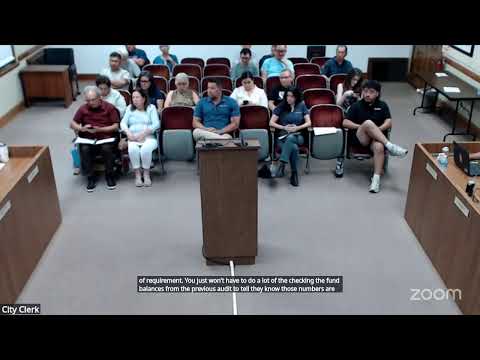
Dozens of residents told the Lindsay City Council on Tuesday they oppose a proposed sale of the city’s water system and asked elected officials to pause the process until the public has full financial details and meaningful opportunities to weigh in.
“Water is life,” Teresa Faustelo said during public comment. “Selling the system to a private company is not a solution without consequences… For low‑income families it would mean they would be spending an unaffordable percentage of their income on water alone.” Faustelo identified herself as a long‑time Lindsay resident.
Several other speakers echoed that view. Leonor Sedna said the decision is being rushed and that “you should have public input on this matter before you voted.” William L. Harris and Jim Hart described worries about rate increases and long‑term loss of local control; civil engineer Jim Prankett warned privately run utilities can eliminate access to certain public funding and estimated rate impacts “roughly in 30 to 70%.” Grace Delgado told the council that small cities that privatize water often regret the decision and urged pursuit of grants and low‑interest loans instead.
Why it matters: Speakers repeatedly said a sale would shift control and transparency from local officials to private shareholders and regulators, with the greatest burdens falling on low‑income households, farmworkers and residents who may not be able to vote. Several commenters also said no comprehensive, public financial model has been provided yet.
Council response and next steps: Council members acknowledged those concerns and asked staff to expand public outreach. At the meeting, members reached consensus to set additional public engagement — including separate English‑ and Spanish‑language sessions — so residents can review proposals and ask questions before any ballot measures or final approvals. Council members asked staff to provide a written financial model, per‑building or per‑customer cost estimates, and alternatives such as phased capital investment, grants or low‑interest loans.
What remains unresolved: The council did not adopt a final decision on sale or transfer terms during the meeting. Speakers asked for a pause of the process and greater transparency; council members directed staff to schedule town‑hall meetings and to return with detailed financial scenarios and procurement options before taking final action.