Get Full Government Meeting Transcripts, Videos, & Alerts Forever!
Get email alerts on the Data Centers topic
No spam. Unsubscribe anytime.
Roswell council adopts temporary moratorium on new data centers after public concern about land use and utilities
Summary
On Jan. 12, 2026, the Roswell Mayor and Council unanimously approved a temporary emergency moratorium on the establishment of new data centers after a homeowner warned such facilities consume large footprints and strain local utilities.
The Roswell Mayor and Council voted unanimously on Jan. 12 to adopt a temporary emergency moratorium on the establishment of new data centers in the city. The resolution, read into the record by City Attorney David Davidson, directs staff to pause approvals so the city can reassess zoning, infrastructure and potential community impacts.
The resolution was introduced by City Attorney David Davidson and moved for approval by Councilwoman Sarah Bon with a second from Council Member Alan Cells; the council raised hands to record a unanimous vote. Council members present for the vote were Mayor Mary Robisho and Council Members Sarah Bon, Alan Cells, Christine Hall, Jennifer Philippy, Aaron Bramley and Chris Zack.
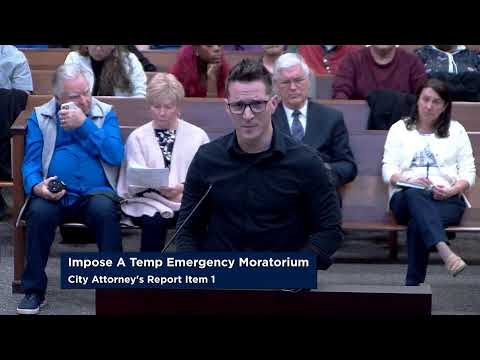
During public comment, Derek Wood, a Roswell homeowner, told the council he supported a pause on new data centers. “I think a data center for Roswell is a misappropriation of resources in terms of land use,” Wood said. He argued data centers “do not employ a whole lot of people,” occupy large footprints and place “a strain on utilities” such as power and water, and urged the council to consider alternative energy or cooperative models.
Councilwoman Sarah Bon echoed concerns raised during public comment, saying, “Mr. Wood made an excellent point,” and characterized the moratorium as an opportunity for the city to reassess whether existing zoning and code provisions appropriately account for utility demand, land use and potential sound impacts on nearby residents. City Attorney Davidson framed the action as a temporary measure to allow staff and the council time to evaluate regulatory options.
The resolution does not adopt permanent restrictions; it halts new approvals while the city reviews code, utility impacts and siting criteria. The council did not set a public deadline or specific sunset date for the moratorium during the meeting. The council then moved to a final agenda item to go into closed session to discuss personnel, litigation and/or real estate and adjourned the public meeting.
What happens next: the moratorium directs staff to review code and report back to the council; the city did not specify a follow-up timeline during the meeting.