Get Full Government Meeting Transcripts, Videos, & Alerts Forever!
Get email alerts on the School Facilities topic
No spam. Unsubscribe anytime.
Mesa Public Schools official cites $1.4 billion in facility needs and vast HVAC inventory
Summary
Mike Kramer, the district's operations and construction director, told listeners the district oversees more than 900 buildings, roughly 8.4–8.5 million square feet, and has identified $1.4 billion in capital needs, straining maintenance and prioritization plans.
Mike Kramer, executive director of operations and construction for Mesa Public Schools (Mesa Unified District (4235)), said the district oversees a large and aging portfolio of facilities and faces heavy capital pressures.
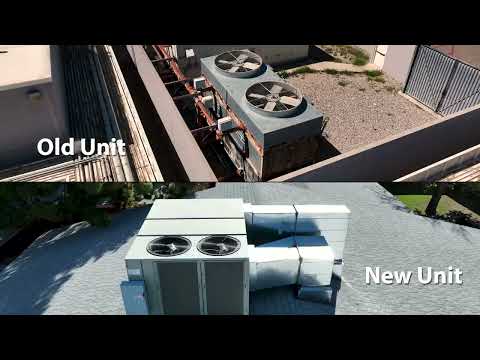
Kramer said the district manages "well over 900 separate buildings" and about "8.4, 8.5 million square feet of space" that must be kept comfortable and operational. He said the district has "over 25 service technicians" who respond to repairs and replacements and pointed to Lincoln Elementary as an example, where the site has "well over 100 units" including package units and "a central plant chiller system."
The district official placed part of the facilities argument in educational terms, saying "when you have fresh air entering an occupied space, certainly it has a positive impact on the, you know, the amount of oxygen in there, which consequently allows, say, for example, students to test better." Kramer also summarized the scale of deferred and planned work: "You know, the Mesa Public Schools, we've identified, $1.4 billion in needs."
Kramer framed the $1.4 billion figure as a planning constraint: "So we have to prioritize where we spend our capital money. So it's quite a challenge to keep up with." He said the combination of facility scale, the range of equipment types (from package rooftop units to chilled-water central plants), and limited technician staffing drives the district's capital and maintenance planning.
No formal decisions, timelines for projects or funding sources were specified in the remarks. Kramer's statements were presented as an overview of inventory and needs rather than a proposal for specific actions; next steps, funding plans and schedules were not detailed in the transcript provided.