Get Full Government Meeting Transcripts, Videos, & Alerts Forever!
Get email alerts on the Street Improvements topic
No spam. Unsubscribe anytime.
City outlines $6.5 million 2026 street and utility plan; residents raise legal and cost concerns about 60% special-assessment policy
Summary
City staff presented proposed 2026 street and utility projects with a probable cost of roughly $6.5 million and said the city’s policy would allow up to 60% of surface-improvement costs to be assessed to benefiting properties; residents questioned assessment fairness, water-main replacements and sidewalk proposals.
City staff on Jan. 20 presented a preliminary $6.5 million package of street and utility improvements for 2026 and described a funding approach that could assess up to 60% of surface-improvement costs to benefiting property owners.
"When the city contemplates making an infrastructure improvement and issuing debt under the Chapter 429 statute, it is required to conduct two public hearings," said Randy Sabart, city engineer, explaining that the presentation describes scope and preliminary costs and that the city has not yet commissioned designs or contractors.
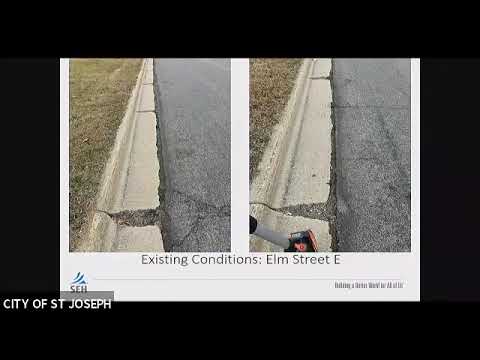
Consultant Bryce Johnson walked through proposed work areas—Morningside, Northland Heights, an industrial park, Baker Street, Jade Road, Dale Street, a Kleinfelter parking-lot expansion and Callaway Street—and the two typical resurfacing approaches: a 1½-inch batuminous overlay or a full-depth reclaim and repave. Staff said construction costs were estimated at about $4.85 million with contingency, engineering and other expenses bringing the probable total to roughly $6.5 million.
On funding, staff said the city’s assessment policy describes a maximum surface-assessment basis of 60% with the remaining cost subsidized by the city. "The city's assessment policy will assess up to 60% of the cost for the improvement," the presentation noted, and staff gave an example showing a preliminary special-assessment estimate of $2,228.80 for an 80-foot lot under the current rate assumptions.
Several residents pressed staff during the public hearing. "The special assessment amount charged to a property owner may not exceed the special benefit to the property," said Nick Bologan, a Morningside Loop resident, citing Minnesota case law and a University of Minnesota study that, he said, calculated market-value increases at roughly 18–20% in comparable cases. Bologan asked whether the city would consider market-value increases rather than project cost when setting assessments.
Randy Sabart and other staff responded that the city commissions a special-assessment benefit analysis to cap assessments and provide a ceiling based on increased market value and comparable projects. "We commission a special assessment benefit report…that essentially does is cap the assessments," Sabart said, and emphasized that the 60% figure shown in early materials represents a policy maximum and will be adjusted after the appraisal and bidding processes.
Residents also raised concerns about targeted water-main replacements in the Morningside area. Staff said multiple water-main breaks led to additional corrosion and soil testing; where clay soils appear to be attacking ductile-iron mains, staff said the plan is to replace pipe with noncorroding plastic and that excavation is required to determine pipe condition. "We're finding clay-type soils that are attacking the ductile iron pipe," staff explained, describing a plan to excavate, assess and, where necessary, replace mains with inert plastic pipe.
Homeowners along Baker Street objected to a proposed six-foot concrete sidewalk on one side of the road, asking whether property owners would be assessed and whether the sidewalk could be omitted. Staff said sidewalks shown in the packet are part of the city-subsidy column and are constructed in the public right-of-way, and that public feedback would be considered as the design and assessment hearings proceed.
Staff outlined next steps: council could order plans and specifications in February, advertise bids in spring, hold the special-assessment hearing on May 18, and potentially start construction in June with an anticipated finish by July 2027. Final assessment rates, interest and term will be set between now and the statutory special-assessment hearing, and staff said property owners will have a statutory option to pay within 30 days to avoid interest or to finance the assessment over a typical 10–15-year term.
The hearing was informational; no final orders, assessments or contracts were approved at the meeting. The city will complete the special-assessment benefit analysis and return to council for further decisions and the formal special-assessment hearing.