Get Full Government Meeting Transcripts, Videos, & Alerts Forever!
Get email alerts on the School Capital Planning topic
No spam. Unsubscribe anytime.
Portsmouth leaders outline multi-year school capital plan and defend New Franklin renovation
Summary
School and city officials described a multi-year capital improvement plan for Portsmouth schools, defended a three-phase New Franklin renovation to modernize support spaces and mechanical systems, and warned that additions are often chosen over costly new construction; officials asked for clearer CIP element sheets and earlier design funding to aid budgeting.
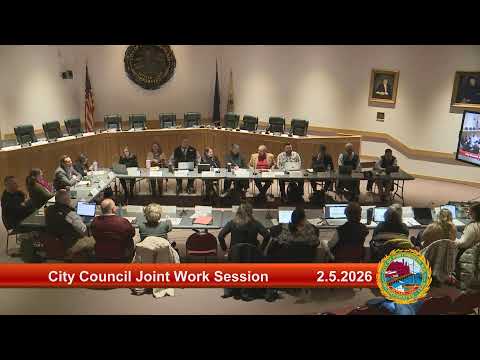
Portsmouth officials and school leaders on Feb. 5 held a joint work session to explain the school department’s capital improvement planning and to answer councilors’ questions about the scope, timing and funding of major projects, including a multi-phase renovation of New Franklin School.
School officials said the session was intended to increase transparency about how projects move from needs assessment to the CIP, not to request immediate approvals. Dr. Mclofflin opened the presentation by saying the district wants to show “how we think beyond the horizon,” explaining that many school projects are rooted in preventive maintenance and long-term asset management that span multiple CIP cycles.
Ken Lynch, director of building, grounds and maintenance, walked the council and board through historical renovations at Portsmouth High School, the middle school and a series of elementary projects. He said the district often uses pilot investments (for example, the condensing boilers and DDC controls installed at New Franklin) as a model that informs larger renovations. Lynch outlined a three-phase plan for New Franklin: a first phase to add a flexible classroom, a second phase to build a consolidated support-services “centerpiece” for case managers and student supports, and a final phase for cosmetic, roofing and security improvements.
Officials emphasized that phased renovations reduce operational disruption and provide flexibility. Lynch noted Little Harbor’s renovation is nearly design-complete and that permitting, wetland reviews and a bid process are underway with a planned spring ground-breaking and an aggressive schedule aimed at opening in August.
Councilors pushed for greater clarity in CIP documents. Councilor Cook and others said they had been surprised by the New Franklin program this year because design funding had not appeared in earlier element sheets; staff agreed that including design and rolling-stock line items earlier would improve budgeting and public transparency. Officials also highlighted grant-seeking (ESSER, state grants, Homeland Security grants) and energy-efficiency analyses as ways to reduce local tax impact.
On the cost-versus-new-construction question, speakers said building an entirely new elementary school remains cost-prohibitive in the current market and that renovations/additions are typically a better value. One councilor cited industry estimates that new construction could cost tens of millions of dollars; staff said that, absent a comprehensive costing-out analysis, renovation remains the district’s working assumption.
The session ended with a request for follow-up materials: councilors asked the school department to provide a more living, public project-tracking page and to include CIP element sheets with projected design and capital costs earlier in the process. Officials agreed to return with the SAU50 agreement and additional detail to help councilors weigh school projects against other municipal priorities.