Get Full Government Meeting Transcripts, Videos, & Alerts Forever!
Get email alerts on the School Safety topic
No spam. Unsubscribe anytime.
PVUSD board hears broad debate on school safety, mental‑health staffing and SROs
Summary
Public commenters, students and board members pressed Palos Verdes Peninsula Unified staff on school safety measures, with calls for more school resource officers or a full‑time director of security balanced against arguments for more mental‑health staff and a districtwide safety framework. Staff outlined current protocols and supports.
The Palos Verdes Peninsula Unified School District presented its safety protocols Thursday as parents and community members pressed the board for clearer action on campus security and mental‑health staffing.
District safety coordinator Brena Tronis described the district’s “Community Partners” approach, which includes site‑level safety plans, an annual slate of drills, a Raptor visitor‑management system and an emergency communications toolkit for schools. She noted that several cities share the cost of school resource officers (SROs) and that the district has increased perimeter fencing at sites, deployed PA systems and maintains a private radio frequency for emergency coordination.
"We also have our anonymous alert systems online," Tronis said, recommending that families "not come to the school unless we ask you to" in an emergency so responders can reunify students safely.
Public commenters called for faster, clearer action. Jeremy Vanderhall pressed the board over recent communications about a yearbook incident, saying the district has been “opaque” and urging the immediate release of any non‑confidential updates. Joan Davidson and others asked what district‑wide curriculum or training had changed since the incident.
Several speakers urged more visible law‑enforcement presence or a dedicated security director. "If the district really takes safety seriously, we should consider having a full‑time chief of safety," Vanderhall said. Sharon Rizzy and Michelle Higgins also urged additional SROs; Rizzy contrasted “50 SAGE counselors” (an assertion made by a caller) with only two SROs in the district and urged rethinking that balance.
Staff corrected the numbers during the meeting: a district official said there are seven contracted SAGE therapists (not 50) and that roughly $6 million funds 43 full‑time mental‑health employees, plus the SAGE contract. Officer Bob Watt, the district’s SRO, described the role as both a deterrent and a resource who builds relationships with students.
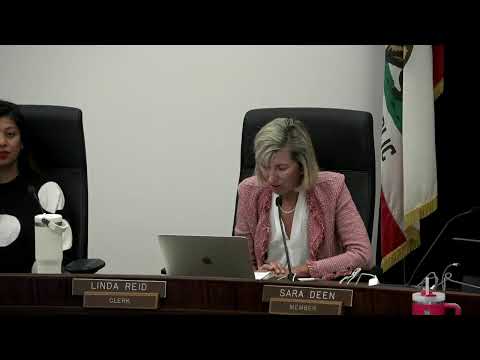
Board members pressed staff for options rather than immediate votes. Several members — including Julie Hamill and Linda Reed — supported examining a formal safety framework, such as the National Institute of Justice/DOJ comprehensive school‑safety model that organizes physical safety, school climate and student behavior interventions, and asked staff to return with a proposal. Board members also expressed interest in exploring whether the district should pursue a director‑level security position and whether cities could help fund additional SROs.
The board did not vote on new staffing or funding measures. Instead, members directed staff to return with more detailed information, including a costed comparison of options (additional SROs, a director of security, and framework adoption) and clearer documentation distinguishing legally mandated safety work from board‑initiated changes.
Next steps: staff will review the safety framework options and provide more detailed budget and implementation recommendations at a future meeting.