Get Full Government Meeting Transcripts, Videos, & Alerts Forever!
Get email alerts on the Homelessness topic
No spam. Unsubscribe anytime.
DA describes 'hard‑middle' approach to homelessness crimes, highlights HOT outreach
Summary
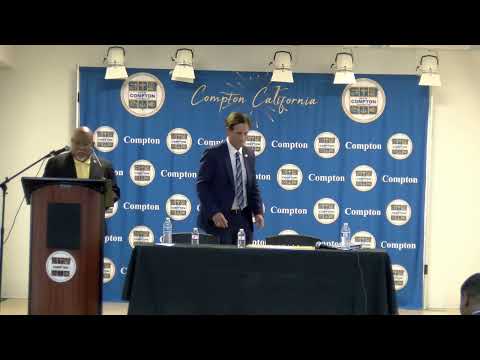
At a Compton NAACP town hall, District Attorney Nathan Hutchman said homelessness is not a crime, described removing prior limits on prosecuting encampment offenses, and outlined a five‑point HOT (Homeless Outreach Team) plan paired with diversion options and individualized reviews.
District Attorney Nathan Hutchman told Compton residents that his office treats homelessness itself as noncriminal but will prosecute crimes that occur in encampments while offering diversion and service options for eligible defendants.
Asked how his enforcement approach avoids criminalizing poverty or mental illness, Hutchman said his office removed blanket directives that previously discouraged prosecuting certain crimes in homeless encampments. He described a "hard middle" approach that evaluates each case individually — weighing a defendant’s background, the offense and the impact on victims — and reserves custody for repeat, serious offenders while offering community‑based alternatives for others.
Hutchman described the Homeless Outreach Team (HOT) model used in Los Angeles: a five‑point, multiagency plan that identifies and assesses people in encampments, conducts outreach to offer services, posts 14‑day notices and then executes coordinated removals with storage and shelter options. He said this model typically moved people voluntarily into services and rarely required arrests.
The DA also outlined diversion programs for nonviolent first‑time offenders, including veteran and drug courts and longer-term rehabilitation tracks that can lead to dismissal if participants complete required treatment and supervision.
Hutchman framed the mix of enforcement and services as necessary to protect community safety while offering supports for people who can be diverted to treatment and housing. He invited community members and groups such as the Compton NAACP to hold the office accountable for how discretion is applied in local cases.