Get Full Government Meeting Transcripts, Videos, & Alerts Forever!
Get email alerts on the Civic Symbols topic
No spam. Unsubscribe anytime.
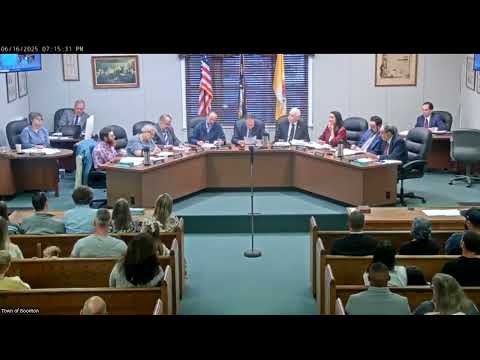
Boonton council reads letters backing U.S. and POW-MIA flag policy amid discussion of Pride month
Summary
Council members read four emailed correspondences supporting flying only the U.S. and POW-MIA flags on town poles; at the same meeting one member noted the absence of a Pride Month proclamation and read a statement on inclusivity.
The Boonton Town Council read four emailed correspondences at Monday’s meeting from Christina O., Lloyd Martinson, William Kelly and Virginia Hughes that urged the town to fly only the American flag and the POW-MIA flag on municipal poles.
The letters thanked the governing body for maintaining a limited flag policy and for honoring veterans and patriotism. Excerpts read aloud included praise for flying "only those flags which unite all of us" and support for keeping the town’s flag poles reserved for the U.S. and POW-MIA flags.
Earlier in the meeting a council member referenced the absence of a Pride Month proclamation at the prior meeting and paraphrased an inclusive statement adopted elsewhere, saying in part: "everyone should be able to live without fear of prejudice, discrimination, violence, and hatred based on race, religion, gender identity, or sexual orientation." The council briefly discussed the mayor’s discretion over meeting procedure and whether correspondence should be read in full or summarized; the town clerk confirmed submitted letters are public records and are included in the minutes.
Why it matters: The exchange highlights local debate about symbolic municipal actions (flag protocols and proclamations) and the council’s approach to handling public correspondence in meetings. Citizens and advocacy groups interested in flag policy and local inclusivity statements may view the council’s practice for reading or summarizing correspondence as important to transparency and public trust.