Get Full Government Meeting Transcripts, Videos, & Alerts Forever!
Get email alerts on the Knox Ranch Rezoning topic
No spam. Unsubscribe anytime.
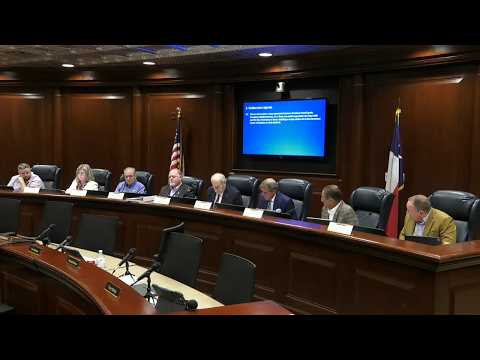
After heated public comments, Granbury council approves Knox Ranch rezoning over planning commission objections
Summary
The Granbury City Council approved a comprehensive‑plan amendment and an industrial rezoning for the Knox Ranch property (ordinances 26‑15 and 26‑16) by 5‑1 on April 7, 2026, despite Planning & Zoning’s recommendation to deny and lengthy public opposition citing transparency, air, water and traffic concerns.
Granbury — The Granbury City Council voted 5‑1 on April 7, 2026, to approve a comprehensive‑plan amendment (Ordinance 26‑15) and a zoning change from interim holding to industrial (Ordinance 26‑16) for the Knox Ranch property described in the city filings, overriding the Planning & Zoning Commission’s recommendation to deny the request.
The planning item drew one of the meeting’s largest turnouts and sustained public comment. Residents, civic groups and a Hood County commissioner warned of the environmental, health and infrastructure implications of allowing large industrial uses, including data centers and a proposed gas‑fired power plant, near existing neighborhoods and public facilities. "No one has had sufficient time to review all these records," Rachel Jacobson said during public comment, criticizing the timing and transparency of disclosures to residents.
Several speakers cited concerns about water use, air emissions and traffic. Nanette Samuelson, Hood County commissioner for Precinct 2, told the council that local and county residents share the same air and water resources and urged the city to protect the region. "Air does not know city boundary lines," Samuelson said, asking the council to consider cumulative impacts of existing and proposed plants in the county.
City staff and the city attorney explained a legal constraint raised repeatedly during the hearing: a state permit issued by the Texas Commission on Environmental Quality (TCEQ) can vest project rights if a required government authorization existed or a permit application was filed within statutory timelines prior to annexation, which can limit a municipality’s ability to prohibit or control a proposed use. City staff said one choice was to leave the property interim holding and accept that a vested permit could allow construction without local conditions, or to amend the comprehensive plan and adopt industrial zoning so the city could place conditions and exercise development controls.
After discussing those tradeoffs, the council opted to adopt the comp‑plan amendment and rezone the property to industrial by a 5‑1 vote. The Planning & Zoning Commission had earlier voted to deny the rezoning, and commissioners debated whether the city could instead accept a legal nonconforming use and retain fewer controls.
What this means: By zoning the property industrial, the city gains legal tools to impose conditions and standards on future site plans, special use permits and development agreements, rather than leaving control to state‑level vesting under the TCEQ permit. Opponents said the city’s action does not yet resolve technical gaps in the new supplemental standards or answer questions about water allocation, noise thresholds and enforcement. The council directed staff to review public suggestions and recommended technical refinements after the meeting.