Get Full Government Meeting Transcripts, Videos, & Alerts Forever!
Get email alerts on the Ocean Governance topic
No spam. Unsubscribe anytime.
Samoa says village committees drive ocean governance, urges scientific caution on deep-sea mining
Summary
At a UN Ocean Conference panel in Nice, Samoa's ambassador described Samoa's Samoa Ocean Strategy and a multi-ministry governance committee, highlighted village women's committees as implementation drivers, and warned that deep-sea mining should not proceed without robust scientific evidence.
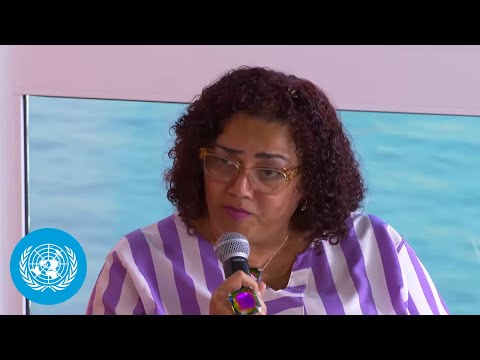
At the UN Ocean Conference panel in Nice, Ambassador P Luteru, Samoa's permanent representative to the United Nations, described Samoa's Samoa Ocean Strategy (SOS) and said the country has established an ocean governance committee spanning multiple ministries to align ocean management with national development priorities.
"We have set up what we call SOS, which stands for Samoa Ocean Strategy," Luteru said, adding that the committee is chaired by foreign affairs and the ministry of natural resources and environment and seeks a holistic, multi-sectoral approach.
Luteru emphasized community ownership of ocean policy, saying "it's the village women's committee that is the main driver" of implementation in Samoa, and stressing that policy must prove relevant at the grassroots level.
The ambassador said Samoa supports international ocean agreements, including the United Nations Convention on the Law of the Sea and the Convention on Biological Diversity, and described alignment efforts with the Antigua and Barbuda Agenda for SIDS (ABBAS) to guide the next phase of SIDS development.
On deep-sea mining, Luteru urged caution: he noted recent policy developments referenced in the session and said such activity "will proceed only if we have carried out the proper investigation" and the scientific evidence shows it is safe to engage in that space.
The panel discussion framed Samoa's approach as one combining national strategy, cross-ministry coordination and local participation, with implementation at the community level presented as the key test of whether policy produces lasting results. The session closed with a broad call from panelists for stronger finance and technical support to ensure SIDS can translate plans into on-the-ground action.