Get Full Government Meeting Transcripts, Videos, & Alerts Forever!
Get email alerts on the Policy Update topic
No spam. Unsubscribe anytime.
Board takes first read on social‑media and foreign‑trip policy changes, asks legal follow‑up
Summary
On first reading the board reviewed proposed updates to social‑media and out‑of‑country trip regulations, raising questions about "limited" vs. "open" forum language, enforceability of courtesy expectations, sequencing of advertising versus board approval for foreign trips, and insurance and rooming requirements.
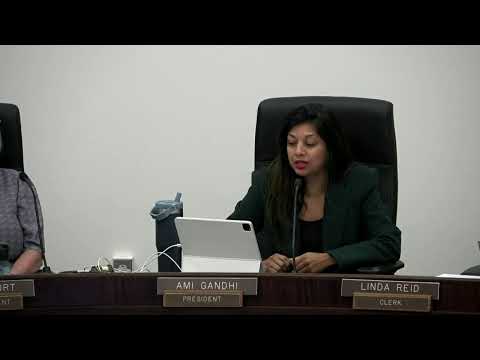
The Palos Verdes Peninsula Unified School District Board reviewed a packet of policy and administrative regulation updates on Oct. 23, focusing discussion on a proposed social‑media policy and new rules for out‑of‑country field trips.
Board members asked staff to consult legal counsel about a wording change in the social‑media policy that replaces the legal term "limited public forum" with "open," saying the terminology carries distinct First Amendment implications. "I would recommend that we leave the term of art because it's specific to First Amendment analysis," one board member said. Members also questioned deleting language that said the board "expects users to conduct themselves in a respectful, courteous and professional manner," noting the board may be limited in its ability to enforce such expectations.
On regulation 6153.2 for foreign trips, members pointed out a sequencing problem: the draft barred advertising a foreign trip prior to board approval yet listed required documents (permission slips, medical releases, hold‑harmless agreements, travel documents, chaperone plans) that typically cannot be completed before public advertising. Board members and staff agreed to revise the language to separate conceptual board approval from later compliance steps and to clarify whether advertising may precede conditional approval. Staff also said they consulted an external travel insurance advisor (AIP) and would incorporate guidance about insurance and pre‑approval checks.
Other policy topics discussed in first reading included electronic communications by board members, public statements by board officials, and updates recommended by the California School Boards Association. Board members requested follow‑up language for a second reading and legal review where the policy touches constitutional questions or requires additional procedural clarity.