Get Full Government Meeting Transcripts, Videos, & Alerts Forever!
Get email alerts on the Data Center Development topic
No spam. Unsubscribe anytime.
Krambu pitches 'AI factory' at Bonner Mill; county staff outline zoning, renewable-energy and noise rules
Summary
Developers proposing to convert the Bonner Mill planer building into an "AI factory" told a March community meeting they are seeking to energize an initial 3 MW and use closed-loop water cooling; Missoula County planning staff said applications will require 100% new renewable-energy offsets, e‑waste plans and a special review because the site is near residences.
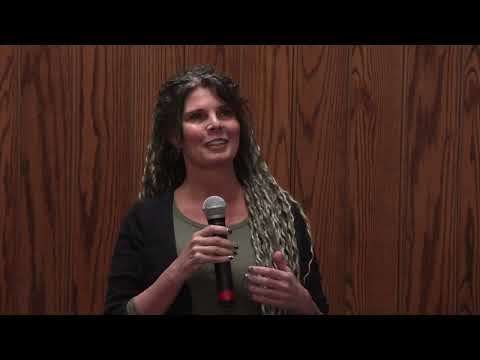
Representatives for Krambu Inc. presented plans and answered questions at a community meeting at St. Ann's Church in Bonner about a proposal to convert the Bonner Mill planer building into an "AI factory" — a water-cooled data center that its proponents say can recapture waste heat for local uses.
"We're looking for a way to adapt to change," said Mike Casey, manager of the Mill, introducing the project team. Steve Wood, who said he led prior industrial-to-data-center conversions, described the project as an opportunity to reuse the site and create local jobs. "We're looking to build an AI factory here," Wood said, adding that several reuse concepts (greenhouses, aquaponics, heat reuse) are part of the team's long-term vision.
Why it matters: the proposal raises questions that the county's zoning rules are designed to address — energy sourcing, noise and vibration, water use and e‑waste — and the next procedural step is a county land-use special-exception review for uses within 500 feet of residences.
What the developer said: Krambu's team said it has submitted to start at up to 3 megawatts and that power would be purchased on the wholesale market rather than drawn in a way that would raise local electricity rates. Amber Orr, an electrical engineer on the team, said the developer expects any transmission or infrastructure upgrades required by Northwestern Energy would be paid by the applicant. "It would have absolutely no effect to your rates," Orr said.
On water, Steve Wood and his engineering team described a closed-loop liquid-cooling design they called "net zero" in normal operation and said initial system fills are on the order of about 500 gallons per megawatt. Wood said some periodic flushing to remove dust and debris is part of maintenance; he said discharged water would be handled per Montana DEQ requirements.
On noise, the team said new water-cooled systems and vibration-dampened foundations will produce lower fan noise than older, air-cooled facilities. The developers said their cooling towers operate around 50–55 decibels at close range, and they noted previous mill-era equipment produced higher noise levels.
What county staff said: Jenny Dixon of Missoula County Planning outlined four zoning conditions for data centers and cryptocurrency facilities: (1) location in industrial zones (the site is in a heavy-industrial zone), (2) an e‑waste recycling plan, (3) demonstration of sufficient new renewable energy to offset 100% of the operation's electricity ("additionality" onto the grid), and (4) a special-exception review when a site is within 500 feet of residences to evaluate noise, lighting, buffering and traffic. "We will be working to determine how they meet that requirement," Dixon said of the renewable-energy condition.
Swain Neumann, the county's climate-action program manager, read the ordinance language on the renewable-energy requirement: operations "shall be required to develop or purchase sufficient new renewable energy to offset 100% of the electricity consumed by the operation" and must show that the action "will introduce new renewable energy onto the electrical grid beyond what would have been developed otherwise."
Points of disagreement and outstanding studies: public attendees pressed the team on how big the project could become and where power and water would be sourced. The record in the meeting contains inconsistent scale statements: developers repeatedly said the initial request was for 3 MW, while other statements in the room referred to speculative larger build-outs (one speaker mentioned "100 megawatts" as an outside example and another noted 29 MW as a possible infrastructural bound). County staff and the developers said additional infrastructure and feasibility studies are required before any larger expansion could be approved.
Next steps and public process: county staff said no full application had been accepted at the time of the meeting but that a preliminary zoning-compliance filing exists and a complete application could be submitted in time for the May 6 land-use board meeting for the special-exception review. Dixon and meeting organizers pointed attendees to the county engagement page (missoulacountyvoice.com) and Friends of Two Rivers' materials for a compiled Q&A.
The meeting did not record any formal action or vote; presenters said they remain in due diligence and are still evaluating potential off-take clients and infrastructure feasibility. Community members and staff said enforcement of zoning requirements is complaint-driven but that the county has a voluntary-compliance-first enforcement approach and can escalate to penalties if regulations are violated.