Get Full Government Meeting Transcripts, Videos, & Alerts Forever!
Get email alerts on the Immigration Enforcement topic
No spam. Unsubscribe anytime.
Governor Walls calls federal immigration operation in Minnesota an intrusion; reverend describes filming, intimidation and ongoing harm
Summary
During committee questioning, Governor Walls said a large federal enforcement operation in Minnesota appeared to single out the state rather than target fraud; a reverend testified that people who filmed federal agents were followed, had plates recorded and were subject to pepper-spray and detentions.
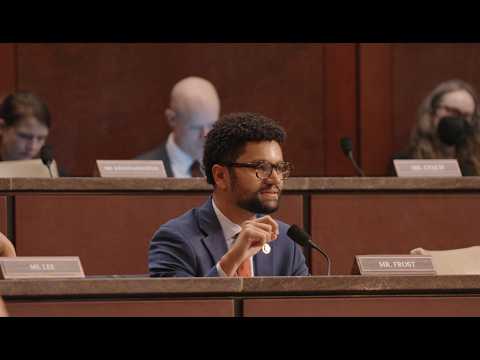
A committee member opened questioning by quoting a Truth Social post attributed to former President Donald Trump — “The day of reckoning and retribution is coming” — and asked Governor Walls what the problem is with a president directing federal agents to carry out "retribution." The committee member made the reference while citing two recent killings mentioned earlier in the exchange.
Governor Walls replied that Minnesota experienced what he described as the largest federal incursion into a state in recent memory and said the operation appeared to single out Minnesota rather than focus on fraud. He said the activity continued for more than 10 weeks and warned elected leaders in other states they would face similar problems if they confronted these issues. "We were subject to ... the largest invasion of a state by the federal government," he said, adding that the operation "had nothing to do with stopping fraud."
The governor (or the respondent) also cited comparable enforcement in Chicago — about 500 agents in a so-called Midway Blitz — and said there were still roughly 650 agents in Minnesota, stressing the operation was ongoing.
A reverend who spoke during the exchange said community members who tried to record federal agents were told they could not film, had their license plates photographed, were followed and were subject to intimidation. "Those videos ... have been in part the reason why we know what's going on," the reverend said, describing video evidence as crucial to revealing the actions he described. Speakers also alleged that protesters were pepper-sprayed and that some bystanders who filmed agents were violently detained.
The discussion referenced the murders of Renee Nicole Good and Alex Prey and said some administration officials had characterized observers or the people involved as "doxing," "assault," or "agitators." The committee member cited public statements in which administration figures had labeled a person connected to that case in severe terms.
The committee member framed part of the exchange around faith, asking what would happen to refugees "Mary and Joseph" at the border. The reverend replied that Jesus and his parents were refugees and said he feared they would suffer the same harms community members had described.
The committee member concluded by appealing to religious and moral obligations, invoking Matthew 25 and urging standing with "the least, the widow, the orphan" as an expression of conscience. The member then yielded back.
No formal motions, votes, or legal citations were recorded in the transcript provided.