Get Full Government Meeting Transcripts, Videos, & Alerts Forever!
Get email alerts on the Education Budget topic
No spam. Unsubscribe anytime.
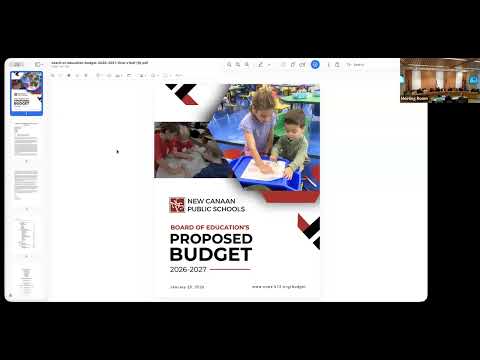
Council presses New Canaan school leaders on staffing increases during FY2027 budget review
Summary
Town Council members questioned why the school district's staffing counts rose beyond prior budget requests over multiple years; school leaders said most additions were legally required special-education and flexible hires and presented a year-by-year delta analysis showing about 18.82 net additional FTEs plus 11 building-substitute FTEs over six years.
The New Canaan Town Council focused much of its March 18 meeting on the Board of Education's proposed fiscal 2027 budget and whether the district has added more staff than prior budgets requested. Council members asked for clearer, regular reporting after the Board of Education presented a detailed staffing analysis.
"When we approve budgets, we're not approving hires," Council member Hillary Arman said as she pressed the superintendent for explanations of past increases. "My confusion results from maybe mathematics and trying to follow that."
Superintendent Dr. Brian Lexi told the council the district had prepared a six-year, year-by-year analysis comparing what was requested in each year's budget with the actual hires that followed. "If you look across these six years," Dr. Lexi said, "the majority of the additional staff were 7.2 FTE in special education ' so we've added staff where the needs have emerged." He said the net increase not directly requested in prior budgets is 18.82 full-time equivalents (FTEs); when the supplemental "building substitutes" program (which the BOE said was started during COVID and sometimes omitted from staffing-plan tallies) is included, that adds about 11 FTEs and brings the two calculations into close alignment with the board of finance's earlier estimate.
Board of Education Chair Phil Hogan framed the budget priorities as "maintaining academic excellence, investing in our people, and addressing operational needs," and the superintendent said many of the unplanned hires were driven by legally required special-education placements and emergent "complex learner" needs that cannot be deferred. "We would morally and legally never say, 'We'll put it in place next year when we have the budget,'" Dr. Lexi said, describing the district's obligation to respond in real time.
The BOE also described accounting and reporting changes made this year to help the town bodies compare prior proposed budgets with subsequent actual hiring. Dr. Lexi said the staffing packet now shows the prior-year proposed number, the October 1 actual, and the next-year proposed number to make deltas explicit.
Council members sought further transparency about intra-year hires and funding sources. Several members asked for recurring, near-real-time staffing updates to avoid surprises and to help the board of finance and town council monitor year-to-year staffing drift.
The meeting also covered related budget items: the board of finance reduced the BOE capital request by about $1.8 million (including cuts to a high-school communications system and East School paving), and the BOE described a one-time proposed internal transfer and turnover-savings assumptions used in the operating budget.
The council and BOE agreed to continue the detailed discussion and to schedule follow-up briefings and a one-on-one walkthrough for council members who requested deeper explanations. The BOE said it would provide the multi-year exhibits and staffing spreadsheets used in the presentation and work with the council on more frequent updates ahead of final votes.