Get Full Government Meeting Transcripts, Videos, & Alerts Forever!
Get email alerts on the Zoning topic
No spam. Unsubscribe anytime.
Committee authorizes consultant work to refine Cleveland’s form-based zoning pilot after robust debate
Summary
Council committee approved hiring a consultant (budgeted $124,000) to revise the form-based code pilot and draft additional district guidance; the meeting included a public comment urging pause, lengthy council questioning about public notice, reporting and the scope of any expansion, and two amendments to limit perceived overreach and require procurement notice to council.
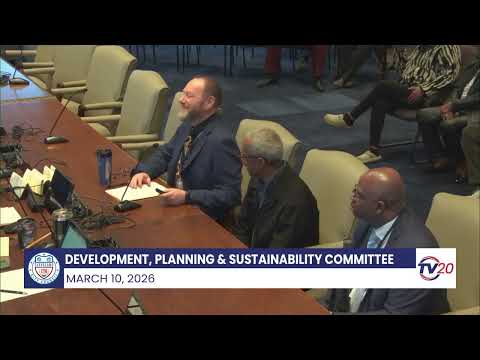
The Development, Planning and Sustainability Committee authorized city planning on March 9 to hire a consultant to refine the existing form-based code pilot and prepare draft text and district templates that could be considered for future legislative action.
Planning Director Cali Mersman and Chief Zoning Administrator Shannon Leonard said the $124,000 contract (already budgeted) would help the department clarify administrative pathways, update district types (for example, industrial-form districts, downtown/taller building districts and accessory dwelling unit standards), resolve conflicts with the fire code and improve public-facing permit information. Staff emphasized the work is a planning effort: any map or text changes would still require separate legislative action before council.
Michael Armstrong of the Detroit Shoreway spoke during public comment and urged the committee not to fund expansion until the pilot’s effects are evaluated more fully. Armstrong said some pilot implementations had administrative problems, that required six-month reports were missing or incomplete, and that particular projects had been permitted in ways that surprised nearby residents.
Council members pressed staff for data on pilot-area permit volumes, turnaround times and the composition of permits (alterations vs. new construction). Shannon Leonard said the pilot generated roughly 115 form-based permits in the first period and an average permitting turnaround of about 35.6 days; staff offered to provide more granular permit and completion data to council members. The presentation noted that many pilot permits were small-scale rehabs (decks, porches, accessory work) but that several larger projects had also come forward.
Several council members expressed support for streamlining permitting and reducing the frequency with which applicants must seek variances at the Board of Zoning Appeals. Others warned that removing routine variances from public hearings can leave neighbors unaware of developments affecting them, and they pressed for clearer notice practices. To address those concerns the council adopted two amendments during the meeting: one to remove language in the ordinance that could be read as approving form-based code expansion without further council action (the amendment struck “and expand the form-based code to additional districts and geographies”), and a second amendment requiring the director to provide written notice to the clerk of council when purchases are made through cooperative procurement (to increase transparency of consultant selection methods). After those changes, the ordinance passed.