Maricopa County board authorizes litigation on multiple code‑enforcement cases after staff says administrative options exhausted
Summary
The board unanimously approved items 47–52 authorizing the county attorney to pursue litigation on zoning, environmental health and code violations after staff said inspections, notices and civil hearings failed to secure compliance.
The Maricopa County Board of Supervisors voted unanimously March 11 to authorize the county attorney to pursue litigation in multiple code‑enforcement matters, approving agenda items 47–52 after staff described a complaint‑driven enforcement process and repeated efforts to gain voluntary compliance.
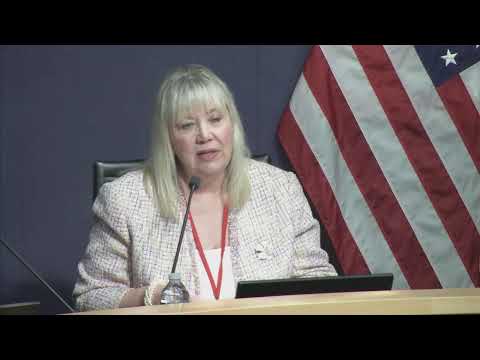
During a public comment period tied to those items several residents urged greater transparency and asked how members of the public could obtain clarifications on agenda materials before votes. Vice Chair Leco and Chair Brophy McGee invited the county attorney and department directors to respond.
County Attorney Lennon (as recorded in the meeting) stated the items had been discussed previously in executive session to obtain legal advice and to determine a path forward. Tom Ellsworth, director of Planning and Development, explained that code enforcement in Maricopa County is complaint driven: departments inspect properties after complaints, notify property owners of required corrections, allow time to comply, and, if the owner fails to act, issue a summons before a civil hearing officer who may assess fines and set compliance periods. Ellsworth and Andy Linton, director of Environmental Services, told the board the properties on today’s agenda had gone through that administrative process and staff were seeking court enforcement to convert administrative judgments into enforceable court orders.
Supervisors expressed support for proceeding when voluntary compliance has failed. Supervisor Galvin and others commended the planning and environmental services teams for repeated outreach and follow‑up. Vice Chair Leco moved approval of items 47–52; the motion was seconded and passed unanimously.
No specific property addresses or case numbers were read into the public record during the board motion beyond the numbered agenda items; staff testified these matters are complaint driven and had required multiple inspections and re‑inspections. The board did not amend the items and did not direct additional staff follow‑up beyond normal litigation and enforcement steps.
The authorizations allow the county attorney’s office to initiate or continue civil litigation to secure compliance and court orders in the listed matters. The board’s recorded action moves those matters from administrative enforcement into the county’s litigation pipeline.
AI generated
The text on this page is AI generated. Summaries, highlights, analysis, and video transcripts are all produced from the original source material.
AI can make mistakes, so if you spot one, and we will fix it for everyone.
Note: the source content is unaltered by us. Any content source we link to, be it a video, an audio recording, or a document, is presented exactly as its publisher released it. That publisher is usually a government body, sometimes an individual official or another organisation.