Get Full Government Meeting Transcripts, Videos, & Alerts Forever!
Get email alerts on the Higher Education Policy topic
No spam. Unsubscribe anytime.
Indiana student says HB 1001 sidelined liberal-arts programs, cites '584 degree programs' affected
Summary
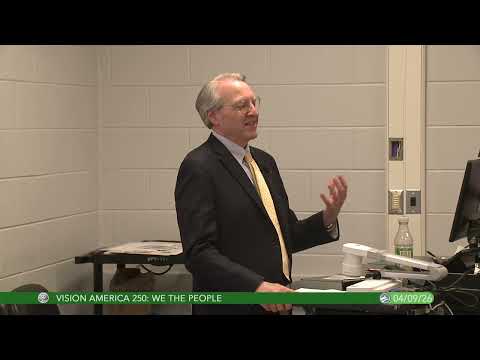
Brooklyn Lambright, a senior at Indiana University, told a Bloomington forum that HB 1001 consolidated or eliminated '584 degree programs' across state public colleges and warned that measuring degrees only by job-market profitability harms liberal-arts education.
Brooklyn Lambright, a senior studying journalism and American Studies at Indiana University, told a community forum in Bloomington that recent higher-education restructuring in Indiana has weakened liberal-arts programs and students' opportunity to shape their own education. "A degree which has offered me so many pathways ... is now considered disposable to state legislators because the value of education is only measured by its profitability," Lambright said.
Lambright described how she rediscovered a passion for critical thinking through American Studies courses and said the state's HB 1001 — which she said prompted campus consolidations — judged academic programs on enrollment and employability rather than broader civic or intellectual value. She told the audience that "in total, 584 degree programs like mine were merged, consolidated, suspended, or eliminated across Indiana's public colleges and universities." That number was presented by Lambright during her remarks and was not verified during the event.
At the same forum, Matt Pierce framed education as central to renewing civic participation and economic opportunity. Pierce argued that government should "invest in its people" across K–12, higher education, child care, housing and health care, saying such investments historically underpinned social programs that broadened economic opportunity.
Lambright and Pierce spoke about alternative priorities for state policy: expanded public funding for K–12 and higher education, reduced student debt, universal early-childhood education, and stronger civic-education efforts. Lambright urged attendees to oppose policy decisions that privilege narrow workforce metrics over what she called the broader public value of the arts, humanities and languages.
The forum included a short question-and-answer period in which attendees raised concerns about media literacy and civic engagement. Lambright emphasized local journalism and media-literacy instruction as tools to rebuild informed participation.
Next steps: the event was primarily a public conversation and did not include a formal vote. Those seeking confirmation of program counts or of HB 1001's statutory text should consult state legislative records or university announcements; the figure Lambright cited was presented as part of her speech.