Get Full Government Meeting Transcripts, Videos, & Alerts Forever!
Get email alerts on the County Budget topic
No spam. Unsubscribe anytime.
District Attorney says pre-trial diversion, forfeiture funds should cover office pay, not property taxes
Summary
At a Marion County budget workshop, District Attorney Tim Carricker asked to fund an assistant and salary supplements from pre-trial diversion and forfeiture accounts rather than property tax revenue, and outlined how those restricted funds are used; account balances were cited as roughly $19,000–$21,000.
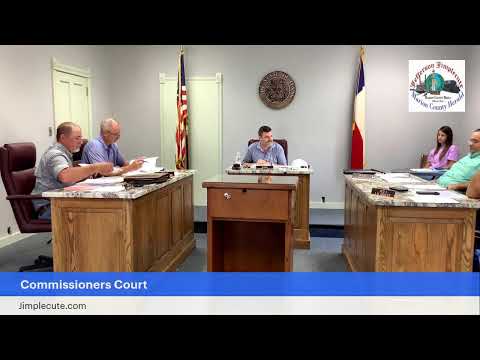
Marion County held a budget workshop June 27 in which District Attorney Tim Carricker explained his office’s budget requests and urged the court to fund certain positions from restricted program accounts rather than from property-tax revenue. Carricker said he had increased some proposed salaries and sought funding for an assistant as the office plans for a long-serving prosecutor’s eventual retirement.
Carricker told commissioners that “PT money is our money. It is a county account. It is a limited county account. It can only be used for PT purposes,” describing pre-trial diversion (PT) and asset forfeiture as revenue streams that are legally tied to specific program uses. He said those funds replenish annually depending on cases and gave examples of typical PT arrangements used to avoid feeding and housing defendants while diverting them into supervised programs.
The DA said the county’s PT/forfeiture accounts were in the range of about $19,000–21,000, and he indicated he was looking at using those funds to help cover potential salary needs if a long-time prosecutor leaves. He also described a separate request noted in the budget documents for $10,000 tied to the district attorney’s office; commissioners asked staff to clarify whether that amount would come from DA-designated funds or require county support.
The discussion illustrated a recurring budget tension: whether to rely on restricted program revenues, such as PT fees and forfeiture proceeds, to pay personnel costs versus using general fund (property-tax supported) dollars. County officials emphasized they did not intend to raise property taxes to cover the DA’s request. The judge described a preference for flat dollar raises across staff rather than percentage-based increases, and commissioners asked staff to return with precise numbers.
Other budget items discussed in the session included a proposed 6% salary benchmark (with commissioners favoring a fixed-dollar approach), a $1,500 subsidy request for a women’s center that provides domestic-violence and trafficking services, a preliminary $5,000 estimate to begin making the county website ADA-compliant, and a $10,000 training/transition allocation for a new treasurer. No formal budget votes or appropriations were taken during the workshop; staff were asked to refine figures and return with clarifications.
The court adjourned at the end of the session after a brief administrative motion.