Get Full Government Meeting Transcripts, Videos, & Alerts Forever!
Get email alerts on the Middle Level Education topic
No spam. Unsubscribe anytime.
Principals emphasize transitions, relationships and teacher retention in Franklin Community School Corp middle-level planning session
Summary
Principals and district staff outlined how Kuster Baker and other middle-level configurations aim to ease fifth- and sixth-grade transitions, increase extracurricular access and address teacher retention and student behavior ahead of an August redistricting review and a November draft of the strategic plan.
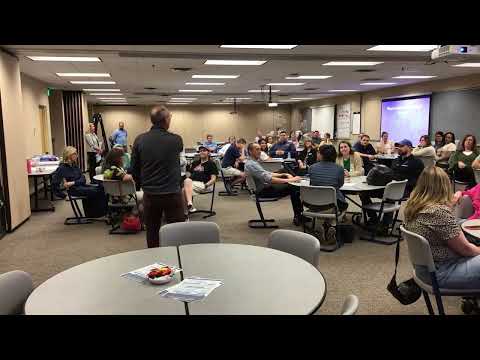
At a district planning session, the principals for Franklin Community School Corp’s middle-level schools described steps the district is taking to ease student transitions and strengthen relationships that staff say are key to student success.
Mrs. Moran, principal of Kuster Baker, told attendees the building receives students from five elementary schools and that the district has organized tours, schedule pickup events and targeted summer services to make the move to fifth grade less overwhelming. "We're still little kids. We're 10 years old. We are elementary. We are not middle schoolers when we come to Kuster Baker," Mrs. Moran said, arguing transition work must be developmentally appropriate for 10–12 year olds.
The principals said the district also relies on extracurricular engagement and structured teaming to help students belong. Mrs. Moran described student-proposed clubs, choir and band as well as an emphasis on student council and classroom teams. She explained teachers use professional learning communities (PLCs) and strategies from the Association for Middle Level Education (AMLE) to design lessons that match the attention and social needs of younger adolescents.
District staff and parents in small-group table reports urged the expansion of exploratory courses such as American Sign Language, architecture and pre‑high‑school credits (for example, biology) to broaden career and college pathways. Table groups also raised interest in industrial-arts offerings and partnerships with local organizations to provide career-readiness experiences.
Principals repeatedly named teacher retention, student behavior and rebuilding trust with families as top concerns. Mrs. Moran described an exercise her staff uses to ensure every child has at least one adult connection: teachers sort student-name cards by familiarity and then assign counselors and exploratory teachers to follow up for students who lack connections.
Mr. House, a district administrator who said he has worked in district schools since 2000, summarized the meeting by saying the recurring themes were transitions, teaming, relationships and technology — and he noted a tension between those in-class supports and the state’s accountability metrics that emphasize testing. The district plans further work this summer and fall: a May meeting focused on the high school experience, a special session on special education in August, a September work session, a rough draft of the strategic plan to the board in October and a final draft for board action in November or December.
The district will return to middle-level configuration and redistricting later in the year with maps and demographic analysis, and promised to email the slide deck and collect additional public input prior to the fall work sessions.