Get Full Government Meeting Transcripts, Videos, & Alerts Forever!
Get email alerts on the Energy Security topic
No spam. Unsubscribe anytime.
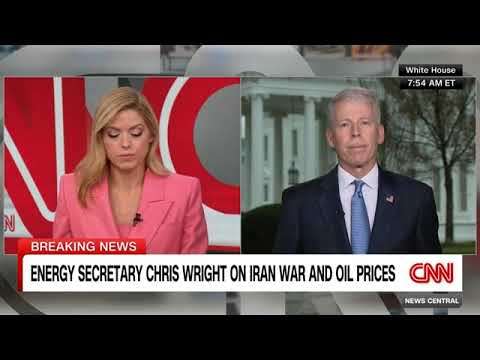
Energy Secretary Chris Wright: SPR drawdown offers short-term relief; Strait of Hormuz must reopen
Summary
Energy Secretary Chris Wright told a broadcast interviewer that recent releases from the U.S. Strategic Petroleum Reserve and a coordinated IEA release ease short-term supply strains but do not solve the underlying problem, which he said is Iran's ability to threaten the Strait of Hormuz.
Energy Secretary Chris Wright said Friday that releases from the U.S. Strategic Petroleum Reserve and a recent International Energy Agency emergency release will help in the near term but will not end the crisis until shipping through the Strait of Hormuz is restored. "Oh, no. This does not mean it's solved," Wright said.
Wright told the reporter the Strategic Petroleum Reserve is meant to offset temporary disruptions through the Strait of Hormuz and that the underlying issue is "Iran's behavior, Iran's military". He said the IEA announced a release of roughly a third of its emergency reserves and that markets reacted overnight, with oil rising above $100 a barrel.
The secretary outlined how the U.S. plans to use exchanges to manage the reserve: "We'll pull out 170 million barrels and put over 200 million barrels back ... at no cost to the taxpayer" because of differences between current spot prices and futures pricing. He cautioned, however, that refill and relief are constrained by physical flow rates, which he described as about "2 million" barrels per day in optimistic scenarios.
Wright emphasized international coordination, saying the effort involves about 30 countries and that keeping Asian refineries running is critical because much Gulf oil is processed there. "Japan is releasing at a much higher relative rate to their imports," he said, adding that sustaining those refinery operations will help tamp down prices during a short-term disruption.
When asked whether the United States can declare success without the Strait of Hormuz reopening, Wright said it cannot: "The Straits of Hormuz needs to be and will be reopened." He described current U.S. military operations as focused on degrading Iran's ability to threaten shipping, produce missiles and advance a nuclear program, and said escorts or other measures to reopen traffic would follow when military resources allow.
Wright framed the approach as accepting short-term pain for a long-term strategic result: restore secure energy flows and reduce the ability of adversaries to threaten global markets. He warned consumers and businesses to expect some short-term price increases for gasoline and jet fuel as markets adjust.
The secretary did not give a specific timetable for reopening the strait or for when market prices would normalize, saying both depend on the evolving security situation and how partners respond.