Get Full Government Meeting Transcripts, Videos, & Alerts Forever!
Get email alerts on the Health topic
No spam. Unsubscribe anytime.
House passes hospital-immigration guidance bill after heated amendments debate
Summary
The House passed Senate Bill 792 requiring Maryland hospitals to adopt policies and training for interactions with immigration enforcement. Two amendments to expand mandatory cooperation with federal agents in criminal and human‑trafficking cases were defeated before final passage, 99–33.
Annapolis — The House of Delegates approved Senate Bill 792 on third reading after extensive floor debate and several defeated amendments that would have expanded circumstances in which hospitals must facilitate communications with federal immigration authorities.
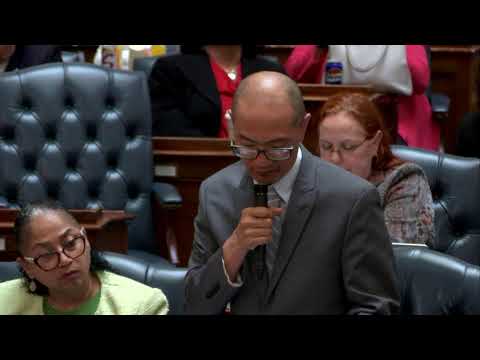
Supporters of the amendments argued that hospital staff sometimes identify victims or perpetrators of serious crimes — including human trafficking and terrorism-related offenses — and that local law enforcement and federal partners need prompt access to information to protect the public. One delegate cited past incidents such as the Boston bombing to argue that rules requiring verification of federal agents and documentation could create dangerous delays in emergency situations.
Opponents, including the floor leader, said hospital workers should not be required to gather or verify patients’ criminal records in emergency care and warned that the amendments would impose operational burdens on clinicians. Two amendments — one focused on communications about certain convicted offenders and another narrowed to human- and marriage-trafficking convictions — were voted down after roll calls (first amendment failed 38–94; later amendment failed 36–96).
The underlying bill requires hospitals to have a policy informed by Attorney General guidance and to provide annual updates; proponents framed the measure as clarifying best practices for lawful interactions with immigration enforcement while protecting patient care. After debate the chamber passed SB 792 on final passage by a roll call of 99 yeas to 33 nays.
Why it matters: The bill aims to standardize hospital protocols for interacting with immigration authorities and to provide training so patient care is not compromised. Critics worry the law could chill care-seeking among immigrant communities or introduce burdensome procedures for clinicians.
What happens next: SB 792 passed the House and will move forward in the enactment process. Lawmakers and health systems may continue to negotiate implementing guidance and training content.