Get Full Government Meeting Transcripts, Videos, & Alerts Forever!
Get email alerts on the Voting Rights topic
No spam. Unsubscribe anytime.
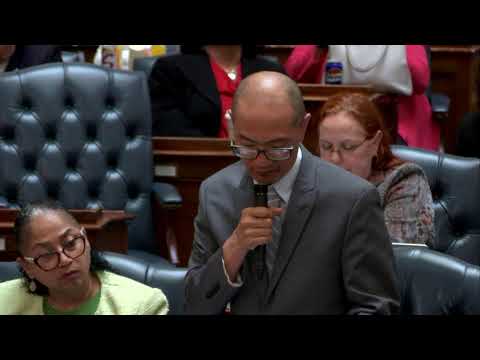
House debate centers on Maryland Voting Rights Act as lawmakers weigh state remedies for alleged vote dilution
Summary
Lawmakers engaged in extended floor debate over the Maryland Voting Rights Act (SB 255), which creates a state cause of action for vote dilution involving protected classes; supporters said the bill streamlines federal processes while opponents, including county and municipal associations, warned of litigation costs.
Annapolis — Lawmakers spent an extended period on the floor debating the Maryland Voting Rights Act, Senate Bill 255, a proposal to give state courts a streamlined process to address alleged vote dilution and polarized voting that some members said the federal Voting Rights Act has recently made harder to remedy.
“The bill prohibits a method of electing the governing body of a county or municipal corporation that dilutes the votes of members of a protected class,” the floor leader said in explanation, adding that the measure authorizes the Attorney General and private plaintiffs to bring state-court suits to remedy alleged vote dilution.
Supporters said the bill would make a cumbersome federal process more accessible to plaintiffs and would allow faster remedies in cases such as Wicomico County and past Baltimore County disputes, potentially saving jurisdictions significant legal costs. Opponents — including testimony cited from the Maryland Association of Counties and the Maryland Municipal League — warned the state law would expose counties and municipalities to more litigation and legal expense, and could be used to challenge longstanding local election systems such as at-large voting or mixed at-large/district systems.
Floor exchanges focused on how polarized voting and vote dilution are proven, what remedies courts could order (redrawing lines or altering election methods), and whether the bill would require changes in counties that hold at-large elections or mixed systems. Several delegates asked whether school boards or state legislative districts were included; sponsors said school boards were not included in this draft and that the bill is race-neutral and modeled to track federal principles while giving state courts clearer authority.
The committee’s favorable report and substitute amendments were adopted on the floor and the bill was ordered printed for third reading. Sponsors said they wanted a state mechanism to identify and remedy vote dilution more efficiently than the federal process has in recent years.