Get Full Government Meeting Transcripts, Videos, & Alerts Forever!
Get email alerts on the Higher Education Transparency topic
No spam. Unsubscribe anytime.
Students, faculty press Boston City Council for more transparency, student representation at Northeastern
Summary
At a March 23 City Council hearing, students, faculty and journalists urged Northeastern University to publish trustee minutes, restore DEI staffing, clarify ICE policy and include students in governance; councilors pledged a symbolic resolution and a working session but recorded no formal vote.
Boston City Council Committee on Education members heard more than four hours of testimony March 23 from students, faculty, journalists and community advocates who urged private colleges in Boston — most prominently Northeastern University — to increase administrative transparency and strengthen student and faculty representation in decision-making.
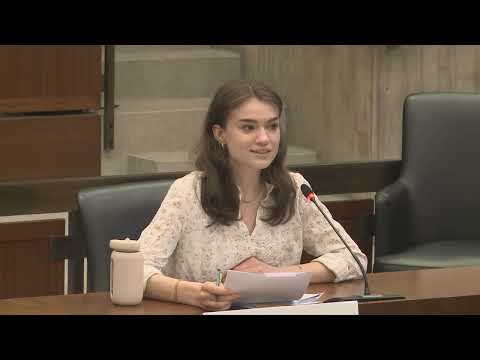
The hearing, chaired by Councilor Renard Pepper on behalf of Committee Chair Councilor Mejia, opened with three panelists: Emily Spatz, editor in chief of the Huntington News; Kyle Belcher, senior fellow at the American Council of Trustees and Alumni; and Adam Omar Hussein, a professor of philosophy and vice president of Northeastern’s chapter of the American Association of University Professors. Each urged more open communication between university leadership and campus constituencies.
"We do have a relationship with Northeastern’s media relations," Emily Spatz told the committee, "but we do not get answers to questions that matter, including on international students and campus safety." She said the student newspaper has repeatedly been denied interviews with the university president and that an Office of Diversity, Equity and Inclusion was rebranded to an "Office of Belonging" with little public explanation.
Student witnesses offered detailed firsthand complaints. Felicia Dias, co‑president of the Black Student Association, said the university’s current Black undergraduate share is about 5.1% despite an earlier presidential pledge of 10% and described recent campus changes that she said harmed belonging: new lab fees, defunded student organizations, unbuilt housing and cuts to DEI programming. A range of other students and staff described sudden reductions in college discretionary budgets (witnesses cited cuts as large as 75–80% in particular units), cancelled events and changes to demonstration policies that they said have chilled protest and student organizing.
International students’ precarity was a recurring theme. A fourth‑year speaker said international students constitute roughly 35% of the undergraduate body and nearly 60% of graduate enrollment at Northeastern, and urged a public commitment from the university not to provide student data to federal immigration authorities beyond legal requirements and not to admit ICE agents without judicial warrants.
Adjunct faculty and union representatives described opaque course‑assignment practices, late hiring and a broader pattern of limited institutional responsiveness. SEIU Local 509 representatives noted that, according to testimony at the hearing, the university has run multi‑year operating surpluses and a growing endowment — figures witnesses cited to argue the institution can restore programs and supports if it chooses.
Speakers also raised governance questions about the board of trustees. Multiple witnesses — including student government leaders who cited campus referenda with overwhelming support for trustee transparency and student representation — urged Northeastern to publish board agendas and minutes and to create structural pathways for student and faculty trustees on policy oversight committees.
A second panel presented organized evidence: the Educational Freedom Project and student‑government speakers described a campus climate survey and submitted a packet of materials documenting governance changes, policy revisions to codes of conduct and reductions in staffing for student supports. Panelists called for student seats on the policy oversight committee that reviews university‑wide policies and for clearer public reporting about changes that affect students’ academic life.
Councilors acknowledged limits to their authority over private universities but pledged to amplify concerns. Chair Renard Pepper said the council will prepare a resolution affirming the importance of student and faculty voice and pursue a working session to design a city‑level community oversight mechanism for higher‑education institutions that occupy significant public space in Boston. "We may not be able to compel them," one councilor said, "but we can use our platform to demand answers and to build durable accountability structures." No formal motion or vote was recorded at the hearing.
What the hearing yielded was a long list of concrete requests: publish board meeting minutes and agendas; restore or clarify the roles and staffing of student‑facing offices; publicly state the university’s policy on cooperation with immigration enforcement; explain recent budget and program changes affecting Africana Studies and other units; and open regular, structured channels for student and faculty participation in governance.
Next steps: council members said they will draft a resolution and convene a working session with student leaders, faculty and community representatives to design a proposed oversight panel and follow‑up measures. The council did not set a timetable for the resolution or for formal subpoenas or inquiries.
The hearing record is now public and includes dozens of witness statements submitted for the docket. The committee said it will use those materials to inform the resolution and the proposed working session.