Get Full Government Meeting Transcripts, Videos, & Alerts Forever!
Get email alerts on the Education topic
No spam. Unsubscribe anytime.
Auburn school leaders seek $11.2 million bond to add sixth grade to Auburn Middle School
Summary
School officials presented a plan to reconfigure Auburn Middle School to serve grades 6–8, saying the change would improve curriculum alignment and free elementary capacity; the school department proposed an $11.2 million bond that mixes necessary CIP work and space-creation costs.
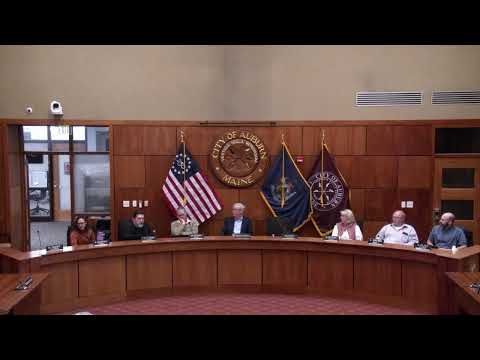
School officials on March 30 outlined plans to reconfigure Auburn Middle School and add sixth grade, and asked the City Council to consider a bond request of roughly $11.2 million to fund the work.
Dr. Doris, who led the school's presentation, said the central educational rationale is curriculum continuity: "The middle school project right now involves adding sixth grade to the middle school which currently houses 7th and 8th grade students," she said, adding that a three‑year span (grades 6–8) will permit stronger alignment and expanded access to athletics and specialized instruction.
Assistant Superintendent Scott Anir described the facility work: three new classrooms added to the building footprint, conversion of underused vocational/STEM space into classroom and science lab space, bathroom and ADA upgrades for fixtures dating to 1982, roof and mechanical system replacements, waterproofing of first‑floor walls, and kitchen/food‑service renovations. He said the design and bid timeline would aim to start construction in April 2027 and complete a 16‑month build so sixth graders could move in by August 2028.
Amanda Couture, the school business manager, presented the financing picture and a savings model tied to possible future elementary consolidation. She said the projected request is "just below 11.2 million," and that roughly $6.2 million of the total represents capital improvement needs identified in the 2023 Herman study (roof, fire alarm, ADA), while approximately $5 million would create the instructional spaces needed to bring sixth grade into the middle school.
School presenters said the reconfiguration would move about 240 sixth‑grade students out of elementary schools, freeing space and allowing the district to consider consolidating an elementary school after deliberate study and community engagement. The school committee, they said, had unanimously approved advancing the project to the schematic design phase and had held two community forums to gather feedback.
Council members raised questions about enrollment projections, the timing of potential operational savings, and how the bond payment would compare with those savings. Dr. Doris and staff cited two streams of enrollment analysis — state Department of Education projections and the city's comprehensive plan demography work — that both show a gradual decline in enrollment that supports the concept of consolidation over time.
There was no formal council vote at the workshop. The presentation leaves several next steps: finalizing schematic design details (HVAC routing, outlet and fixture placement) so the project can be bid; clarifying the timing and magnitude of any elementary school consolidation; and specifying how debt service would be managed if the council approves a bond at a later meeting.
The school department emphasized oversight and community engagement throughout the process: "This project is really focused on students and learning first," the presentation concluded.
Outcome/next steps: the school will proceed with schematic design work, seek council consideration of a bond package, and continue community engagement and school‑level transition planning.