Get Full Government Meeting Transcripts, Videos, & Alerts Forever!
Get email alerts on the Wastewater Management topic
No spam. Unsubscribe anytime.
Residents urge council to keep municipal wastewater plant; debate flares over state grant and prior spending
Summary
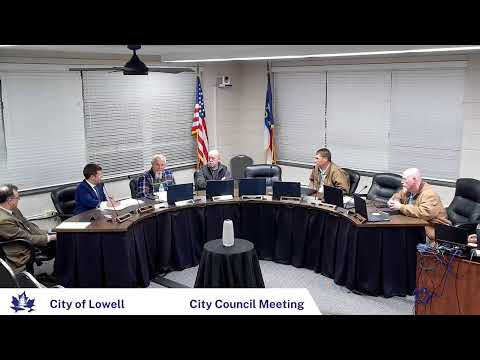
At the Feb. 11 Lowell City Council meeting, residents urged the council not to transfer the municipal wastewater treatment plant to Two Rivers and to use past plant profits for repairs. Council members then debated pursuit of an $8.2 million state grant and questioned prior grant spending and audits.
Richard Lynch, 613 White Oak Drive, told the Lowell City Council on Feb. 11 that the city should not transfer its wastewater treatment plant to Two Rivers and instead should use the plant’s past profits for repairs and long‑term planning. "In the last five years the plant made about $1.2 million," Lynch said, arguing the community had been told replacement costs and capacity forecasts that he described as false and asserting the council should retain the asset and its revenue stream.
Lynch urged the council to set aside 25% of water and wastewater profits for a reserve to fund future upgrades, to seek low‑interest loans and grants rather than decommission the plant, and to use Rural Water technical assistance instead of paying outside consultants. He also cited a 1996 study he said identified about 80 collection‑system repairs that had not been acted on.
Councilman Smith responded in part by urging patience on long‑term speculation, telling colleagues, "let's have this conversation in 15 to 20 years from now," while other members and residents sharply questioned the city’s recent use of grant and administrative funds. Speakers at the meeting noted prior expenditures they said were problematic, including consulting and project administration fees and a study the city paid to evaluate decommissioning the plant.
The discussion expanded into whether the city should pursue an $8.2 million state grant for water and sewer projects. Some council members pressed staff to pursue the state funds and noted the grant would be administered as reimbursement for eligible projects; others said the city should be realistic about what funds are likely to materialize and questioned past spending that they said could jeopardize future grant eligibility or community confidence.
City staff and members also discussed operational fixes that would reduce plant stress, such as repairing the collection system to cut stormwater inflow and reclaiming revenue from plant operations to address a projected $3.4 million collection‑system overhaul cited by commenters.
The council did not take a final vote on ownership of the wastewater plant at the meeting. Instead, members adopted routine agenda items, received presentations and ultimately moved into a closed session later in the agenda to discuss personnel matters.
Why it matters: The wastewater plant's ownership affects long‑term utility rates, control over service levels and how future capital costs are funded. Residents’ calls to preserve the plant and use its profits for infrastructure repair reflect broader local concern about transparency in budgeting, prior grant spending and whether consultants’ recommendations have been acted on.