Get Full Government Meeting Transcripts, Videos, & Alerts Forever!
Get email alerts on the Maternal Health topic
No spam. Unsubscribe anytime.
Baltimore health department presents five‑year refresh of Be More for Healthy Babies initiative
Summary
Baltimore City Health Commissioner Dr. Michelle Taylor told the City Council’s Public Health and Environment Committee that the Be More for Healthy Babies initiative will use an updated five‑year strategy to expand care coordination, strengthen partnerships and preserve gains in infant and maternal outcomes achieved over the past 17 years.
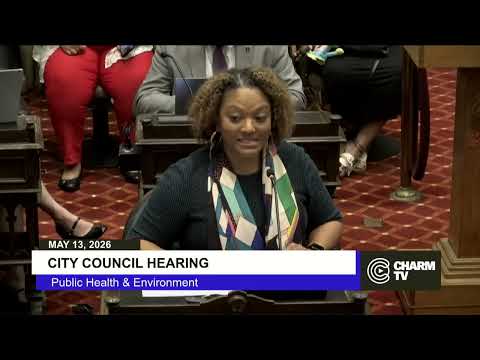
Baltimore City Health Commissioner Dr. Michelle Taylor presented a five‑year strategic refresh of the Be More for Healthy Babies (BHB) initiative to the City Council’s Public Health and Environment Committee, highlighting efforts to expand care coordination, community‑based services and policy advocacy to sustain improvements in maternal and infant health.
Taylor told the committee that BHB is an initiative, not a single program, and that it now includes a core implementation team, a steering committee, a community advisory board and more than 150 partners working across home visiting, WIC clinics and neighborhood sites. "BHB envisions a Baltimore where all babies are born healthy and grow up in supportive families and neighborhoods," she said.
Why it matters: Taylor presented outcome data the Health Department attributes to BHB: the initiative serves roughly 20,000 families a year and provides care coordination to more than 5,000 pregnant women. Since BHB launched in 2009 the department reported a 35% decline in the city’s infant mortality rate and a 37% reduction in the Black‑White disparity in infant deaths; in one target neighborhood, Upton‑Druid Heights, the decline was 54 percent. Taylor framed those results as evidence the initiative’s mix of direct services, communications campaigns and systems work can improve life‑course outcomes.
The strategy refresh covered eight broad strategies: rallying around priority health areas (health and wellness, mental health and emotional well‑being, parenting education, and environmental impact); connecting people to resources via a centralized intake and provider portal; mobilizing communities and onboarding new neighborhoods; building seamless supports for ages 0–5; expanding a citywide communications campaign; advocating for equitable policies; safeguarding leadership and diversified funding; and offering statewide and national technical assistance.
Committee members pressed for specifics. Chair Felicia Porter asked how birth workers, doulas and midwives are reflected within the integrated care model; Taylor said those connections are supported through the new provider portal and the initiative’s network of partners, and that the refreshed strategy strengthens the Health Department’s position to advocate for Medicaid reimbursement and other policy changes. "Because we have that centralized intake system, we can see not only what families are coming in, but what services are being provided," Taylor said.
Council members also asked about sustainability, data interoperability and behavioral‑health ties. Taylor said BHB is funded through braided streams — local, state, federal and philanthropic dollars — and that philanthropic support has helped expand communications and outreach. On data sharing she cited Maryland’s CRISP health information exchange and the department’s recent adoption of an electronic medical record, while acknowledging capacity limits among private and community providers and the need for data use agreements. On substance‑use disorder, Taylor said the department has added staff focused on maternal behavioral health and is exploring a pilot modeled on a county program.
Program participants gave testimony before the presentation. Asia Douglas, a former home‑visiting participant, praised the Nurse‑Family Partnership and credited her nurse with providing material and emotional supports. "Without them, I don't really know what I would do," she said. Another participant, Montre Braxton, described enrolling as a teenager and credited her home visitor with guidance from pregnancy through postpartum.
The committee made an official request that the Health Department circulate the full refreshed strategy to all 14 council members and the council president for review; Chair Porter said that is an official committee request. The department agreed to distribute the document.
The Health Department indicated it will continue to develop specific implementation details requested by council members — including how the model links to early‑learning centers, how referrals to city agencies are made, and precise data‑sharing arrangements — and to follow up to the committee with additional information.