Get Full Government Meeting Transcripts, Videos, & Alerts Forever!
Get email alerts on the Dark Sky Lighting topic
No spam. Unsubscribe anytime.
Alamosa council hears business and conservation arguments as staff proposes easing dark-sky lighting rules
Summary
At an April 8 work session, Alamosa City staff proposed raising outdoor-lumen limits and clarifying sign rules after business complaints that a 500-lumen cap and 3,000K standard had unintentionally limited signage; public commenters and councilors voiced competing safety, economic and environmental concerns. Staff plans ordinance readings in May.
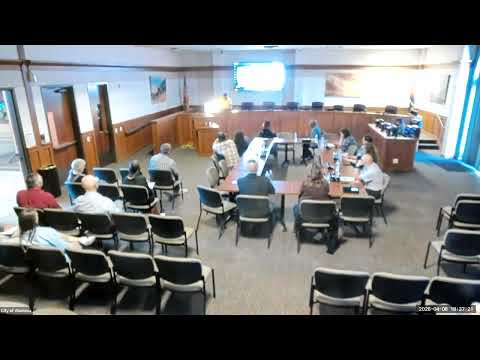
Alamosa City held a work session on April 8, 2026, at which staff recommended rolling back parts of the city’s dark-sky code after business owners and sign contractors said a 500-lumen limit was unintentionally imposed on signage and was creating practical problems.
The proposal presented by city staff (Rachel) would replace a 500-lumen cap for typical outdoor lighting with a roughly 1,100-lumen limit (about the equivalent of a 75-watt bulb), allow up to 10,000 lumens for parks and street lighting so municipal fixtures are commercially available, keep a 3,000 Kelvin cap for color temperature, and treat internally lit cabinet signs without a lumen cap while addressing electronic message centers (EMCs) separately. Staff told council it would return draft code amendments for first reading May 6 and a second reading with a public hearing on May 20.
Why it matters: business owners and sign manufacturers said the accidental 500-lumen linkage to signs has made compliant fixtures hard or impossible to source locally and could hurt downtown commerce; supporters of existing protections warned that loosening rules risks long-term loss of the valley’s dark skies, ecological harms and public-health impacts linked to blue-rich lighting.
What speakers said - James Billings (Billings Electric), who also demonstrated fixtures at the start of the meeting, urged council to “get rid of the dark sky” for signage, arguing that low-output fixtures provide poor security and visibility for sidewalks and driveways.
- Levi Wilner (Extreme Graphics), a sign fabricator, said he “strongly support[s] dark skies” but argued signage is a separate category from general outdoor lighting and that applying the same strict lumen limits to internal sign cabinets is a “category error.” He warned overly low brightness and strict night limits would make signs illegible and harm businesses’ branding.
- Danny Robin (St. Louis Valley Great Outdoors/SLVGO) urged retaining dark-sky goals as a public- and economic-resource, saying that “dark skies does not mean a dark ground” and that targeting light downward and reducing blue-rich color can balance safety, commerce and sky protections.
- Erin Kek (CEO, Alamosa Chamber) read a written statement citing business owners’ concerns about cost, enforcement, and the practical availability of compliant fixtures; she urged caution about imposing burdens that could hurt local enterprises.
Staff explanation and technical fixes Planner Rachel told council the 500-lumen cap on outdoor lighting became linked to signage in the code unintentionally and that staff had discovered the problem when reviewing permit applications (the SpringHill Suites sign was cited as the first enforcement encounter). Rachel summarized staff’s recommendations: raise the general outdoor limit to about 1,100 lumens (commercially available fixtures), allow up to 10,000 lumens for public parks and streets so the city can purchase compliant fixtures, retain 3,000K as a consistent Kelvin standard used by many dark-sky communities, remove the accidental lumen limit applied to enclosed sign cabinets, and treat EMCs (message boards) as a separate code conversation.
Council reaction and policy trade-offs Councilors asked about enforcement, timers and motion sensors as ways to allow higher peak brightness while limiting constant light, and about grandfathering versus fairness for new businesses. Views varied: some councilors supported staff’s compromise as practical and business-friendly; others said the city should consider loosening limits further or preserve stronger protections for future generations and tourism potential.
Next steps Staff said draft code amendments will return for first reading on May 6 (no public hearing) and a second reading with a public hearing on May 20; EMC-specific amendments are likely to be studied separately and may appear as part of a housekeeping code amendment batch in July.
The work session closed with no formal votes. Council directed staff to prepare ordinance language and permit guidance reflecting the discussed lumen, Kelvin and enforcement clarifications.
Sources and context: public demonstration of 7,000K vs. 3,000K fixtures by local vendors; public comments from business owners, the Alamosa Chamber, SLVGO, a university professor, and staff presentation on code history and intent. The city stressed these changes apply to new lighting and construction; existing fixtures are not being forced to change retroactively.