Get email alerts on the Planned Unit Development topic
No spam. Unsubscribe anytime.
Planning commission opens first reading of PUD zoning amendment, directs staff to tailor draft and pull example codes
Summary
After a lengthy March-April discussion, Lexington planning staff presented a draft planned-unit-development (PUD) overlay; commissioners debated flexibility versus neighborhood character, public commenter asked for infill consideration, and the commission asked staff to tailor the text and provide model ordinances and maps of vacant parcels for the next meeting.
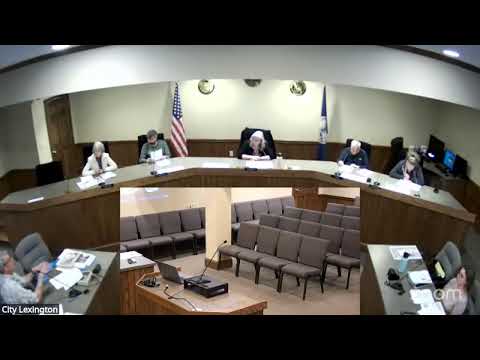
Lexington planning staff opened a first reading of a proposed planned-unit-development (PUD) overlay on April 9, presenting the document as a mechanism to restore flexible infill tools the city last had before the 2017 zoning rewrite. The commission asked staff to refine the language, to clarify where the overlay would apply, and to bring example ordinances and a map of undeveloped parcels to inform future drafting.
Staff member Arie explained that the PUD's "intent and purpose" language aims to "permit greater flexibility in order to allow more creative, innovative, imaginative, and where possible environmentally sensitive development than may be possible if the underlying zoning districts regulations are strictly applied." Arie said the draft would function as an overlay primarily for residential districts (R1, R2, RM) and noted the text currently lacks an upper-bound density provision but could be amended to include one.
Commissioners raised recurring concerns: protecting neighborhood character, whether cottage-housing standards should be preserved as a carveout, and which development standards should be eligible for modification (lot area, lot width, coverage, building type and height, setback, street frontage). One commissioner summarized the tension: the PUD should provide flexibility to unlock difficult infill parcels without permitting "obelisk-style" buildings that would clash with adjacent patterns.
The draft also contains specific administrative and technical provisions. For example, the text requires that projects of two contiguous acres underground utilities, and it contemplates that PUDs will require more detailed concept plans and a public hearing process similar to conditional-use and rezoning reviews. Arie reviewed past local PUD examples (Thompson/Weatherburn, Bordon Road, Lexington Commons, 60 West) to show how previous PUDs used modifications to lot width, setbacks, and private interior roads to achieve development outcomes.
A student who identified herself as Natalie Edgar urged more efficient infill in the "New Town" area and less emphasis on large lawns, saying some vacant or underused parcels could accommodate additional housing. "It could be cool in the future to see some of that land be maybe more efficiently used," Edgar said.
Commission discussion repeatedly returned to procedural and substantive framing: whether the overlay should remain an overlay or become a new district; whether density increases should be codified or left to the approval process; and how to write criteria that preserve neighborhood character (suggested elements: materials, massing, and height) without foreclosing creative site solutions. Several commissioners voiced support for the principle of adding a measured tool for infill while urging staff to bring model language and small-city examples to the next meeting.
Outcome: the commission directed staff to tailor the PUD draft rather than discard it, to provide comparative examples (Charlottesville and Blacksburg were suggested), and to supply a GIS map of vacant or underbuilt residential parcels from the previous comprehensive-plan materials for the commission to review at a future meeting.
The commission did not take a formal vote on the PUD text at this meeting; the item will return for further drafting and discussion.
AI generated
The text on this page is AI generated. Summaries, highlights, analysis, and video transcripts are all produced from the original source material.
AI can make mistakes, so if you spot one, and we will fix it for everyone.
Note: the source content is unaltered by us. Any content source we link to, be it a video, an audio recording, or a document, is presented exactly as its publisher released it. That publisher is usually a government body, sometimes an individual official or another organisation.