Get Full Government Meeting Transcripts, Videos, & Alerts Forever!
Get email alerts on the AB617 CERP topic
No spam. Unsubscribe anytime.
District details AB 617 commercial, residential and outreach strategies for South Sacramento/Florin community
Summary
Staff presented a Community Emissions Reduction Plan (CERP) update focused on six commercial‑source strategies, residential electrification, air filtration programs and community outreach; staff highlighted partnerships with SMUD, Sacramento County BERC and community steering committees.
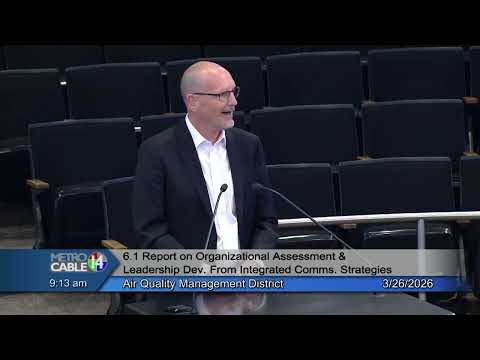
Sacramento Metropolitan Air Quality Management District staff on March 26 outlined prioritized strategies in the AB 617 Community Emission Reduction Plan (CERP) for the South Sacramento/Florin community, focusing on commercial interventions, residential programs and community outreach.
Amy Roberts, presenting the commercial‑sources segment, said the CERP’s objective is ‘‘to implement all 28 strategies in these four categories during the five‑year implementation period.’’ Staff highlighted six commercial strategies that center on education for small businesses (for example, nail and hair salons), a public information portal for air quality and compliance data, and a more focused enforcement presence in the community.
Roberts said the district will partner with the Sacramento County Business Environmental Resource Center and other local organizations to tailor bilingual outreach materials and potential recognition programs for small businesses. She also described plans to build a public portal and a records‑request module to make permitting and compliance information easier to access.
On residential sources, staff described portable air purifier distributions, single‑appliance electrification partnerships with SMUD, and a residential lawn‑and‑garden scrap‑and‑replace component that could include voucher design; staff said some filtration and indoor‑space investments are expected in years two and three of the plan.
Janice Lamb Schneider, director of community air protection, described outreach strategies driven by community steering committees: attending established local events, producing media kits and calendars of events, and creating school‑based air‑quality education materials developed with teachers to meet classroom guidelines. ‘‘The community really recognized that it is important to go where the people are,’’ Schneider said.
Directors asked about bilingual outreach and incentives to help small businesses transition to electric equipment. Staff replied they would connect businesses to existing incentive lists, partner with advocacy groups and leverage community members for outreach. No formal board votes were taken on the CERP materials at the meeting; staff said the plan is on a timeline toward summer adoption.
The board also heard a public comment asking staff to consider cumulative impacts and to review proximity of new crematorium permits to Babcock Elementary; staff said they would follow up with the commenter.