Get Full Government Meeting Transcripts, Videos, & Alerts Forever!
Get email alerts on the Un Mandates Resolution topic
No spam. Unsubscribe anytime.
UN co-chairs say new GA resolution will tighten mandate oversight, improve reporting
Summary
Co-chairs of the UN 80 working group on mandates told correspondents the General Assembly’s recently adopted resolution creates tools — a mandate registry, mandatory implementation‑review clauses and concept‑note requirements — designed to reduce duplication and make mandates more implementable; they said some measures are effective immediately and others require further member‑state decisions.
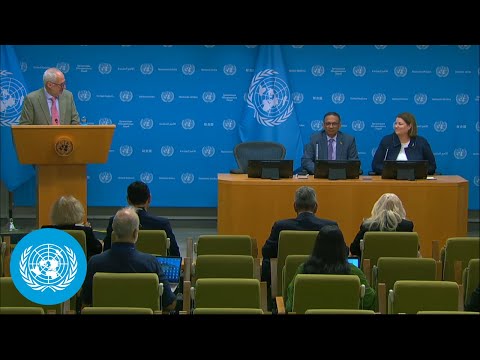
Ambassador Carolyn Schwalger, New Zealand’s permanent representative to the United Nations, and Ambassador Brian Wallace of Jamaica briefed correspondents on a General Assembly resolution on mandate creation, implementation and review that was adopted the previous day.
Schwalger said the text has three parts: "a set of principles," agreed actions for member states and the Secretariat across the mandate life cycle, and "the pathway ahead" for further work. She said the outcome is the product of six months of intensive negotiations in work stream two of the UN 80 initiative and aims to reduce fragmentation and duplication across the UN system.
The co-chairs emphasized practical changes in the resolution intended to improve accountability and make mandates more useful. Schwalger pointed to measures such as "the further development of a mandate registry" and more user‑friendly Secretary‑General report formats. She said the text also makes mandate implementation‑review clauses mandatory for new mandates.
"We have never thought that this should have been a numbers game," Schwalger told reporters, rejecting the idea that success should be measured only by how many mandates are removed. Instead, she said the resolution equips member states and the Secretariat with tools to review, merge or remove mandates where appropriate and to tailor reporting so that resources are used more efficiently.
Wallace said the adoption by a large majority of member states shows readiness to hold the organization to account and to improve impact on the ground. "This is really about becoming more targeted, and therefore more impactful," he said, adding that the resolution will encourage clearer drafting of mandates, concept notes at the outset and implementation reviews tied to measurable targets.
The co-chairs said some actions are immediate. They noted a mandate registry already exists and will be further developed to increase visibility across the mandate landscape, and that the resolution includes requirements — described by the co-chairs as effective from 1 April — for proponents of new mandated activities to submit a concept note, identify a technical contact in the system and provide indicative financial implications. The working group is scheduled to resume its work on May 1 to address more complex technical and political issues.
Reporters pressed the co-chairs on several political concerns. When asked whether review could become "a selective political trimming tool," Schwalger said member states ultimately decide mandates but argued the resolution includes choreography and information‑sharing to balance asymmetries between delegations with different capacities. On whether reforms would help when powerful states discredit particular UN bodies, the co‑chairs said the package is not a cure‑all but should strengthen the organization’s ability to demonstrate relevance and sound stewardship of resources.
The briefers also stressed a focus on evidence and impartial reporting. As Schwalger put it, member states and the Secretariat should use "evidence‑based decision‑making" and ensure analytical assessments are impartial.
The resolution was adopted in the General Assembly with 168 member states voting in favor, the co‑chairs said. They described the text as far‑reaching but pragmatic and said its success will depend on follow‑through and on member states and the Secretariat implementing the agreed actions.
The co‑chairs closed the session by urging continued engagement across UN bodies and promising the working group will continue to refine modalities for mandate review and clustered, system‑wide reviews where multiple bodies address the same thematic issue.