Get Full Government Meeting Transcripts, Videos, & Alerts Forever!
Get email alerts on the Disability Rights topic
No spam. Unsubscribe anytime.
U.N. opening for World Autism Awareness Day urges ‘neuroinclusion’ and equal rights
Summary
At the United Nations World Autism Awareness Day 2026 opening, organizers and U.N. officials framed autism as part of humanity, urged system redesign for inclusion, and highlighted links to the Sustainable Development Goals and the Convention on the Rights of Persons with Disabilities.
The opening of the United Nations World Autism Awareness Day observance on April 2, 2026, called on governments and institutions to treat autism as an integral part of humanity and to redesign systems to ensure equal rights and participation for autistic people.
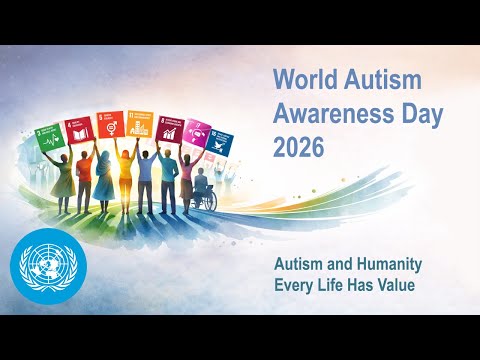
The event was opened by a moderator representing the Institute of Neurodiversity, who announced the theme ‘‘Autism and humanity, every life has value’’ and said, “Every autistic life has inherent dignity. Every autistic person has equal rights.” The moderator urged that the conversation move away from deficit models and toward system redesign so autistic people can take part in decision-making that affects education, health care and employment.
Melissa Fleming, United Nations Under-Secretary-General for Global Communications, thanked the Institute of Neurodiversity for organizing and described the commemoration as ‘‘especially timely’’ given a rise in misinformation and regressive rhetoric. Fleming read a message from U.N. Secretary-General Antonio Guterres: “This World Autism Awareness Day, we celebrate the inherent dignity and worth of all autistic people,” and noted that the Convention on the Rights of Persons with Disabilities establishes that people with disabilities are entitled to the full range of human rights.
Speakers linked neuroinclusion to the U.N. Sustainable Development Goals, saying inclusive health care, education and employment are essential to meeting SDG targets. Fleming emphasized the SDGs’ ‘‘leave no one behind’’ pledge and called for autistic voices to be included in policy-making.
Organizers said the program would feature global experts, policy makers, artists and people with lived experience and encouraged local events and watch parties to amplify the day’s messages. The opening segment closed with thanks to the U.N. communications department and a handoff to the day’s contributors.