Get Full Government Meeting Transcripts, Videos, & Alerts Forever!
Get email alerts on the Us Latin America Relations topic
No spam. Unsubscribe anytime.
Professors Maria Butos and Paul Cabber trace U.S. role in Latin America at Missoula lecture
Summary
At a Western Montana DSA event in Missoula, retired professor Maria Butos and Professor Paul Cabber reviewed U.S. policy toward Latin America from 19th‑century territorial seizures through Cold War interventions and later economic leverage, and discussed contemporary choices including immigration reform and responses to Chinese influence.
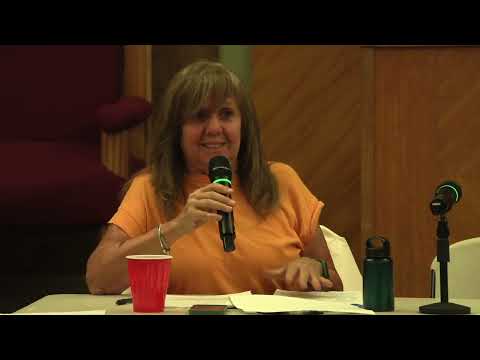
Missoula — Professors Maria Butos and Paul Cabber framed U.S. relations with Latin America as a sequence of shifting strategies Tuesday evening at a Western Montana DSA lecture recorded by Missoula Community Access Television.
Butos, a retired University of Montana instructor who said she taught Spanish language and Latin American literature, opened by tracing the region’s 20th‑century upheavals. "The Cuban revolution... was an armed revolution that overthrew the U.S.-backed dictatorship of Batista," she said, and she argued that the 1959 revolution helped ignite guerrilla movements and a cycle of military regimes in the 1960s and 1970s. Butos described the 1980s as a "lost decade" of debt that brought IMF intervention and the Washington Consensus — policies of fiscal discipline, privatization and deregulation — which she said reshaped national economies.
Paul Cabber, a political‑science–trained professor at the University of Montana, framed "imperialism" as a spectrum ranging from outright military control to subtler forms of dominance. He reviewed historical turning points, noting the 1848 Mexican–American War and the Monroe Doctrine as precedents for U.S. hemispheric influence and citing the 1904 Roosevelt corollary's expansion of interventionist language. He pointed to Guatemala in 1954 as an instance when the United States backed regime change in the name of anti‑communism and private‑sector interests.
Both speakers said the post–Cold War era saw a shift from frequent overt military interventions to economic and political levers. Cabber described the 1990s neoliberal period as one in which the U.S. and international financial institutions exerted influence through market rules and conditional lending, while commodity booms in the 2000s allowed left‑leaning "pink tide" governments to fund social programs. Maria Butos noted regional variations in strategy and outcomes and cited extractivism — heavy reliance on oil, gas and agricultural exports — as a recurrent constraint.
The lecture included claims about measurable outcomes: Butos said Brazil under Luiz Inácio Lula da Silva reduced poverty by about 20 percent during his early years in office, and Cabber cited scholarship describing the United States' long history of interventions in the region. Both attributions were presented as speaker claims and historical interpretation during the talk.
During a Q&A, an audience member asked what a constructive U.S. policy toward Latin America might look like; Cabber urged policymakers to use civil‑service expertise and suggested comprehensive immigration reform as one practical step. Another attendee, identified in the session as Michelle, asked about the consequences of a hypothetical U.S. invasion of Cuba; panelists emphasized the likely regional backlash and the political costs of military action. Questions also addressed China’s growing economic role in countries such as Nicaragua and the long‑term impacts of IMF and World Bank programs on inequality and institutional capacity.
Panelists and audience members debated strategy and accountability: whether leftist governments could combine redistribution with accountable governance, whether grassroots communes and union alliances offer paths distinct from state power, and how extractivist revenue models complicate environmental and social aims.
The program closed with local DSA announcements and pointers to further meetings and resources. The organizers said the lecture was the first in a series and that recordings would be archived by MCAT.
What’s next: panelists and attendees suggested focusing on policy areas within U.S. control, such as immigration and diplomatic engagement, and on strengthening domestic civil‑society mechanisms in Latin American countries to hold governments accountable.