Get Full Government Meeting Transcripts, Videos, & Alerts Forever!
Get email alerts on the Education Schools Of Innovation topic
No spam. Unsubscribe anytime.
House committee advances bill to pilot 'schools of innovation' in Kentucky
Summary
The House Appropriations and Revenue Committee voted to report SB263 (as amended by PHS1), which simplifies waiver procedures for "schools of innovation" and funds a two-school pilot, after sponsor Sen. Steve West described guardrails, a $2.5 million match requirement and KDE oversight provisions.
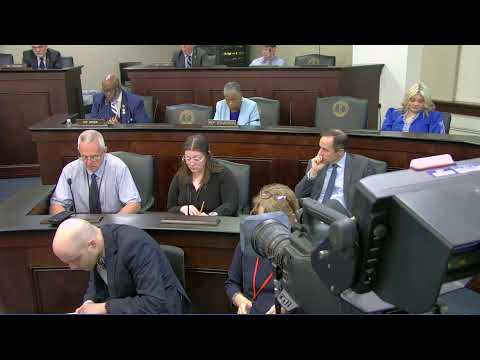
The House Standing Committee on Appropriations and Revenue advanced Senate Bill 263 as amended by PHS1 on April 1, reporting the measure favorably to the floor following sponsor testimony and member questions.
Sen. Steve West (27th District), the bill’s sponsor, told the committee SB263 expands the state’s Schools of Innovation framework to let persistently low-performing schools pursue different models. He said the measure streamlines the Kentucky Department of Education (KDE) waiver process, provides an "off‑the‑shelf" set of waivers, and establishes a pilot to fund two schools statewide with explicit budget language.
"We passed 207 last year," Sen. West said, referring to the earlier schools-of-innovation statute, and described SB263 as cleaning up the process and making it easier for schools to obtain waivers while providing pilot funding outside Northern Kentucky as well.
Committee members questioned how the committee substitute changed the Senate version. Representative Bojanowski asked for specifics; Sen. West pointed to non‑codified guardrails added for the Northern Kentucky pilot and a change expanding references from a single "middle school" to "schools," allowing middle or high school participation. He said the substitute also requires KDE to assist schools seeking waivers to avoid delay.
A legislator asked whether the bill would allow education service providers to use 100%‑sweep contracts (where unspent funds are retained by providers). Sen. West said boards must approve any arrangement, contracts are optional and typically three‑year terms, and the pilot requires a matching $2.5 million contribution from any partner receiving pilot funds, which he described as a safeguard.
Members pressed how KDE could police bad actors. Sen. West pointed to language allowing the commissioner to rescind expedited waivers if they substantially hinder operations, endanger students, impair academic achievement, or support financial malfeasance or criminal activity.
With no further substantive debate, the committee called the roll and recorded 17 yes votes, 4 no votes and 0 passes to report SB263 (PHS1) to the floor.
What happens next: The bill will move to the House floor for further consideration and debate by the full chamber.