Get Full Government Meeting Transcripts, Videos, & Alerts Forever!
Get email alerts on the Early Learning Center topic
No spam. Unsubscribe anytime.
Batavia teachers urge board to preserve kindergarten supports amid Robert Morris reconfiguration
Summary
A coalition of kindergarten teachers told the Batavia board the planned Robert Morris reconfiguration would remove a full classroom, specialized 12:1:1 special-education services, teacher aides and arts/library instruction, risking student safety and potential legal noncompliance.
Debbie Wolf, a kindergarten teacher with 27 years in Batavia City Schools, told the board on May 11 that the planned Robert Morris reconfiguration "is not just a move. It is a systematic elimination of the kindergarten experience and the specialized supports that have defined Batavia's success for decades."
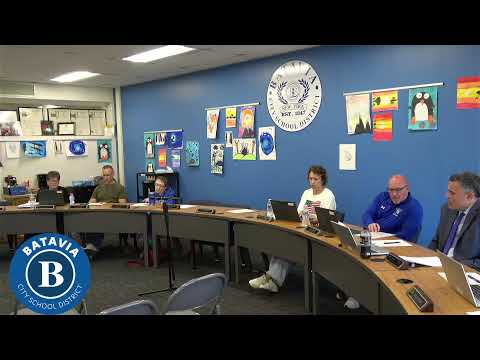
The testimony came during the public-comment period of the board's May 11 meeting, when a group of kindergarten teachers and early-learning staff laid out specific staffing and program cuts they said are embedded in the district's current plan and asked the board to preserve full supports before implementation. Their central demand: keep a full complement of classroom sections, a self-contained 12:1:1 special-education classroom, full-time teacher aides for every kindergarten section, AIS (academic intervention services) reading and math staff, and daily art, music and library time for kindergartners.
Why this matters: teachers said early intervention and classroom supports are central to both safety and learning, and that losing them now risks developmental setbacks and legal exposure. Amy Peterson, a teacher with 23 years' experience, warned that "New part 200 requires that the district maintain a full continuum of services," and said removing a self-contained option before committee decisions are finalized could create due-process and compliance problems if a child's Individualized Education Program requires a setting that no longer exists.
Teachers described concrete program reductions they said the current plan would cause: elimination of one full-time certified kindergarten section and teacher; loss of a self-contained 12:1:1 classroom; reduction or elimination of library, art and music time for kindergarten; fewer full-time teacher aides (the presenters said an eight-section model should be paired with eight full-time aides); and removal of dedicated AIS reading and math personnel. Lisa Schutnick said reduced aide coverage would force teachers to act as first responders rather than instructors, and she urged the board to "prioritize student safety and instructional integrity over budgetary convenience."
The group asked the board to use the kindergarten team as a consultative resource while finalizing implementation plans and to ensure the early-learning center opens with the staffing and supports necessary for compliance and quality. They repeatedly framed the request as both a safety concern and a pedagogical one, saying that arts and library exposure at age 5 are foundational to literacy, social skills and long-term academic outcomes.
Board President thanked the speakers and said the board and Superintendent Smith would discuss the information, follow up with staff (including Jessica, who was referenced by name), and have Mr. Smith contact teacher representatives after the meeting. The board did not take formal action on the reconfiguration at the meeting.
The teachers' group closed by asking for concrete preservation of staffing ratios and specialized spaces before any move is finalized; the board's next procedural step on the reconfiguration was not decided at the May 11 open meeting.